Have you ever heard the concept of, “so close to being great, but one omission makes it a failing grade?”
That’s my opinion on the Golf.com article featuring Kellie Stenzel, outlining the top ten fundamentals needed for a great golf swing.
Have you ever heard the concept of, “so close to being great, but one omission makes it a failing grade?”
That’s my opinion on the Golf.com article featuring Kellie Stenzel, outlining the top ten fundamentals needed for a great golf swing.
It seems someone at Golf.com woke up from a decades-long slumber to discover that Bryson DeChambeau’s prodigious power and length off the tee come from basic swing fundamentals that have been around since the days of… well, forever.
In an article I came across today, there was an expectation before I clicked on the link, from the headline, that something juicy and secret was about to be shared.
You all know my opinions on the Modern Golf Swing, the primary three being that a) it’s mechanically unsound, which is the only disqualifier one should need, b) it’s not as efficient in generating power through leverage and 3) it requires nonstop practice to maintain.
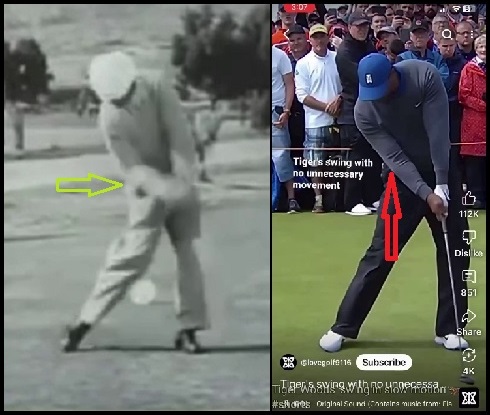
I can show you with a simple gif. moving image whence the leverage derives in the Classic Golf Swing, and why the Modern swing mechanics fall short of it.
I wrote a post a few weeks ago about how I’d been looking at Jack Nicklaus’ very vigorous and aggressive leg action and that I think it’s the way one must perform one’s leg and hip action for maximum efficiency.
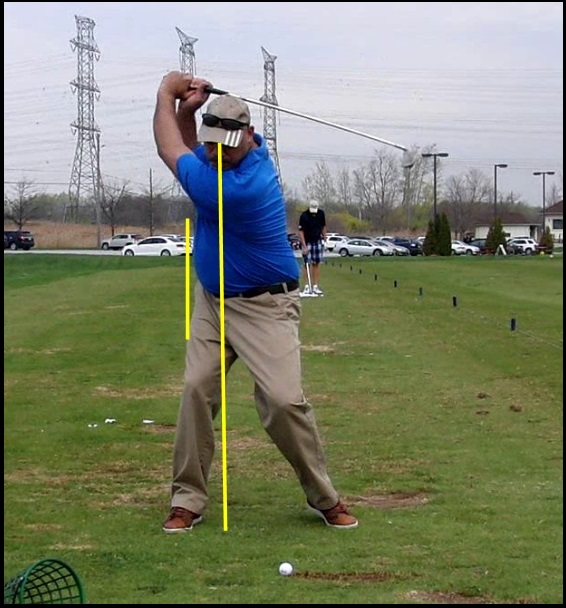
In the intervening two months, I’ve been looking at the setup and the pivot itself (not the leg action, but the back swing pivot angle with regards to arms and hands going back), and while doing that, I re-affirmed the overwhelming importance of that leg and hip action.
Back in 2016, I had a swing that largely resembled John Daly’s with regards to the back swing length and top position, and I’m curious about one thing.
That thing would, could I match the club and ball speed I was generating back then with the new, rebuilt swing upon which I’ve been working the last year?
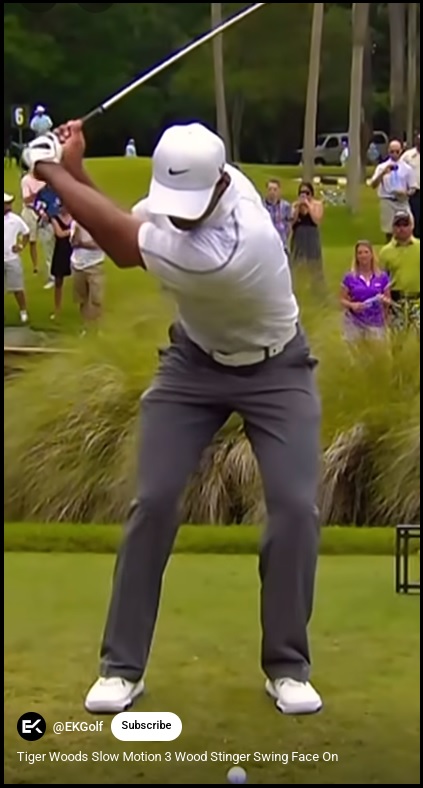
I found this pretty good short clip from Brandel Chamblee on the Classic Golf Swing pivot – although he can be rather controversial on television and a little contradictory at times (he’s always loved and praised Tiger Woods’ various swing models, all of which are Modern and completely unsound as TW’s injury list can attest to), he is pretty sound on swing mechanics, generally speaking.
I’ll say right now about the title – I don’t believe in “magic moves,” as that implies there is something special about swinging a golf club when it’s simple stance and mechanics – any “magic move” is nothing more than mechanically-sound motion.
Having had a depressing look at the current state of affairs in today’s pro game with driving accuracy, I was actually a little but not very surprised that Rory McIlroy came in 157th on the Tour, because I didn’t know this until I had looked at his driver swing.
When I saw what he was doing, I thought to myself, “he can’t be hitting that many fairways with this move,” and proved myself right when I went looking for the just-completed season’s driving stats.
If you want to know why Rory McIlroy is such a long driver of the ball but also a very woeful one accuracy-wise, then you only have to look at what he’s doing with his pivot.
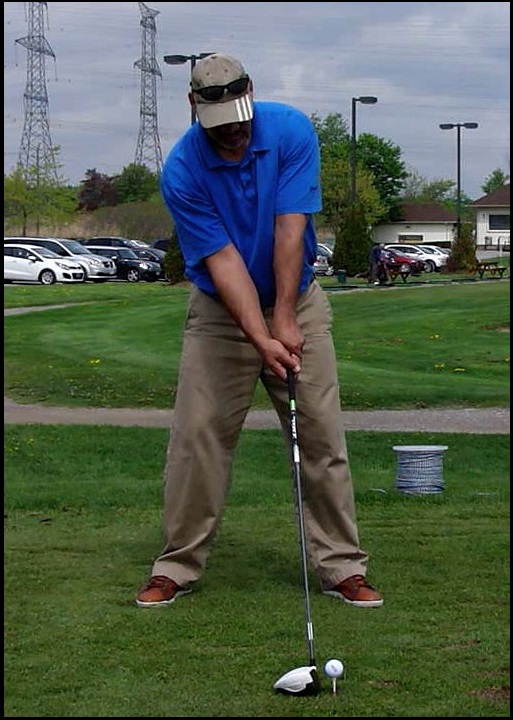
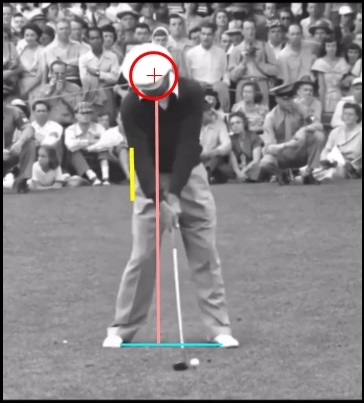
Now, there is absolutely nothing wrong with his setup – I’ve commented on it before and how it supports my hypothesis on the address position – it’s when he gets moving that the issues begin.
I will swallow my distaste for any face-on views of my swing back in 2017 (the right hand grip is all wrong) to illustrate just how easy it is to hit one’s irons and wedges with a vertical swing mindset.
I have a Pitching Wedge in this particular swing in real speed and slo-mo, and all I’m doing is making a back pivot to the top and then swinging down and through to the finish with no mind of the ball whatsoever – it just gets in the way.