
 You all know that I can’t bear to wear golf on television, haven’t been able to since roughly the time I began to refine the MCS Golf Swing model a year from its creation, which would make that around 2015.
After that summer, I began to watch less and less televised golf until I pretty much stopped watching altogether (aside from the odd major weekend when interesting characters were at play, such as this year’s Masters), because of the awful technique displayed by the world’s best players.
They are indeed the world’s best players, and I’ve never argued anything different – I’ve always been about technique however, and the golf swing mechanics of old have deteriorated to such a degree that this is the swing of the world’s number 1 player:
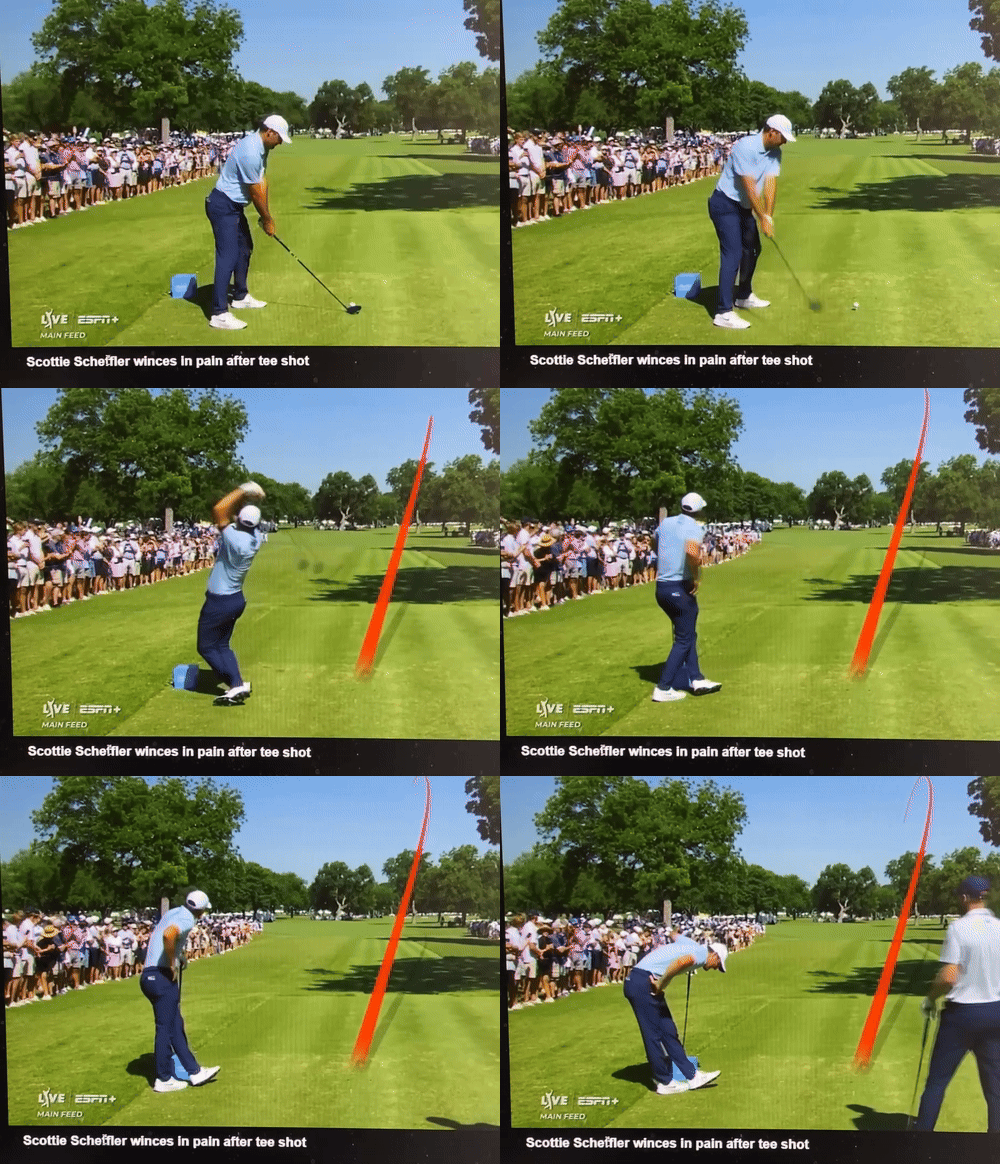
So much for “the Classic Golf Swing has too many moving parts…”
Laughable when today’s players have more moving parts than a Meccano set.
Now, I will never be a professional golfer because, like a speed coach in football or a hitting coach in baseball, I am all about the technical aspects of golf, so I know little bit about technique in several different sports.
The thing you want in technique is stillness, or quietness in the execution – mechanically-correct technique doesn’t have jerking or jumping around to complete a simple motion such as swinging a golf club.
If you watch the MCS Golf Swing mechanics, particularly the down swing, you see that stillness even in motion, and I’d ask you to take a look at the “3 to 9” phase, or what I call halfway down to halfway finished, during the middle of which is the swing bottom:
DJ – 7 Iron Through Impact

You can see the stillness even while I’m in motion – the head is stable, not dropping or lifting, the leading foot is solidly planted to support the transferred weight, and there is no snapping or hyperextension of that leading leg.
See also the “no-turn” aspect of the club coming down through the swing bottom – watch my face as I come into impact and you’ll note the absolute lack of a turning through it.
Only post-impact, as the arms and club continue on their way in the swing arc, do I get pulled around – had I let go of the club at the swing bottom, I’d have been able to stay facing the target line without turning.
Turning through impact the way Ben Hogan did will lead most people to grief, or to a broken back, because it not only requires so much more timing and hand-eye coordination, it places stress on the lower back.
The single greatest argument against is the simplest reason for not turning through the impact or swing bottom – you don’t have to, so why introduce a higher difficulty level and injury risk to a motion when you don’t need it?
The Modern Golf industry has their reason – teach a swing where one turns through the impact, and you’ll have an endless supply of frustrated golfers who keep paying for lessons with no hope of ever really becoming decent ball-strikers.
Not to mention, they don’t even practice what they preach, as you can see one YouTube “guru” teaching one thing on the impact position while doing something else when he actually swings:
“You Should Turn Through Impact, But I Will Stay Square, If You Don’t Mind…”

As I say, endless lessons…
Because of that reason, I don’t see a change ever coming until people stop paying these charlatans for useless lessons and start finding instructors who can teach them a mechanically-correct golf swing.

