
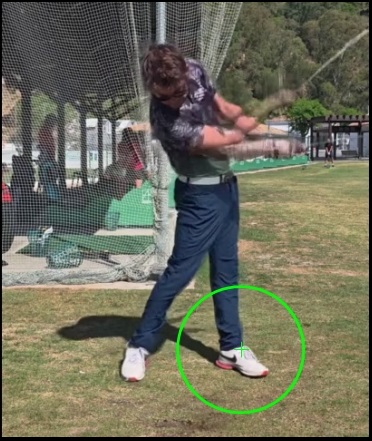
 This flaw is something I’ve seen all the way back to the 1940s, and even greats like Jack Nicklaus, Sam Snead and Arnie Palmer had it either all the time or some of the time.
I will add right now that the MCS Golf Swing theory doesn’t have this flaw, and neither does the working model.
It’s a flaw that I saw in my own swing back in 2006 through 2008 from time to time when I was trying to figure out and model a proper golf swing.
Oh, Ben Hogan, by the way, didn’t have it, nor did Tom Weiskopf – and the reason MCS doesn’t have this flaw is because I built all of my MCS swing models to not have it, thanks to having a modicum of athletic intuition.
I will add that neither of the Mikes, Austin and Dunaway, had this flaw.
So let’s say that I had a little bit of athletic intuition and the pivot actions I had for the MCS Golf Swing model were built studying swings that didn’t have it. First, Mike Austin, then from 2014 onward, Ben Hogan.
What is the flaw?
It’s trying to turn the body through the swing rather than swinging down and through the swing bottom and having the momentum of the arms and club turn the body post-impact with a proper weight balance.
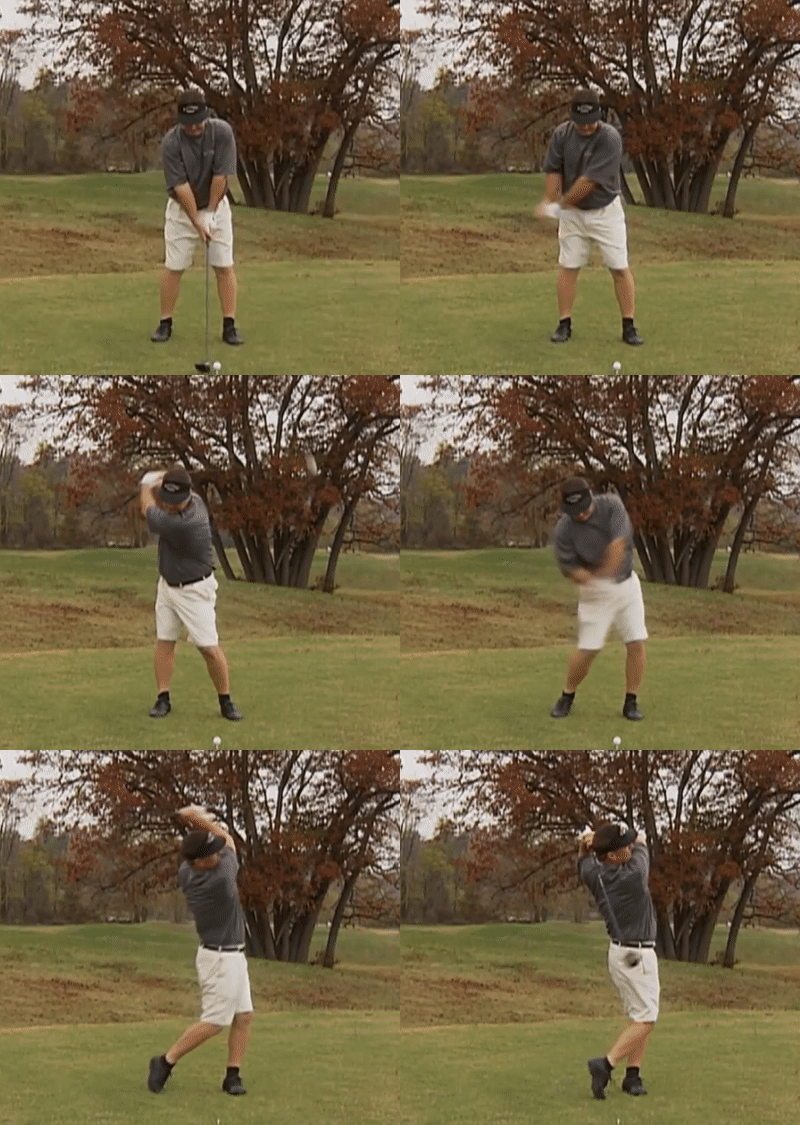
Here’s just showing an internet instructor on YouTube who I won’t identify because I’m just showing how prevalent it is, from 80 years ago to now, who has the same type of flaw.
First, in real time:
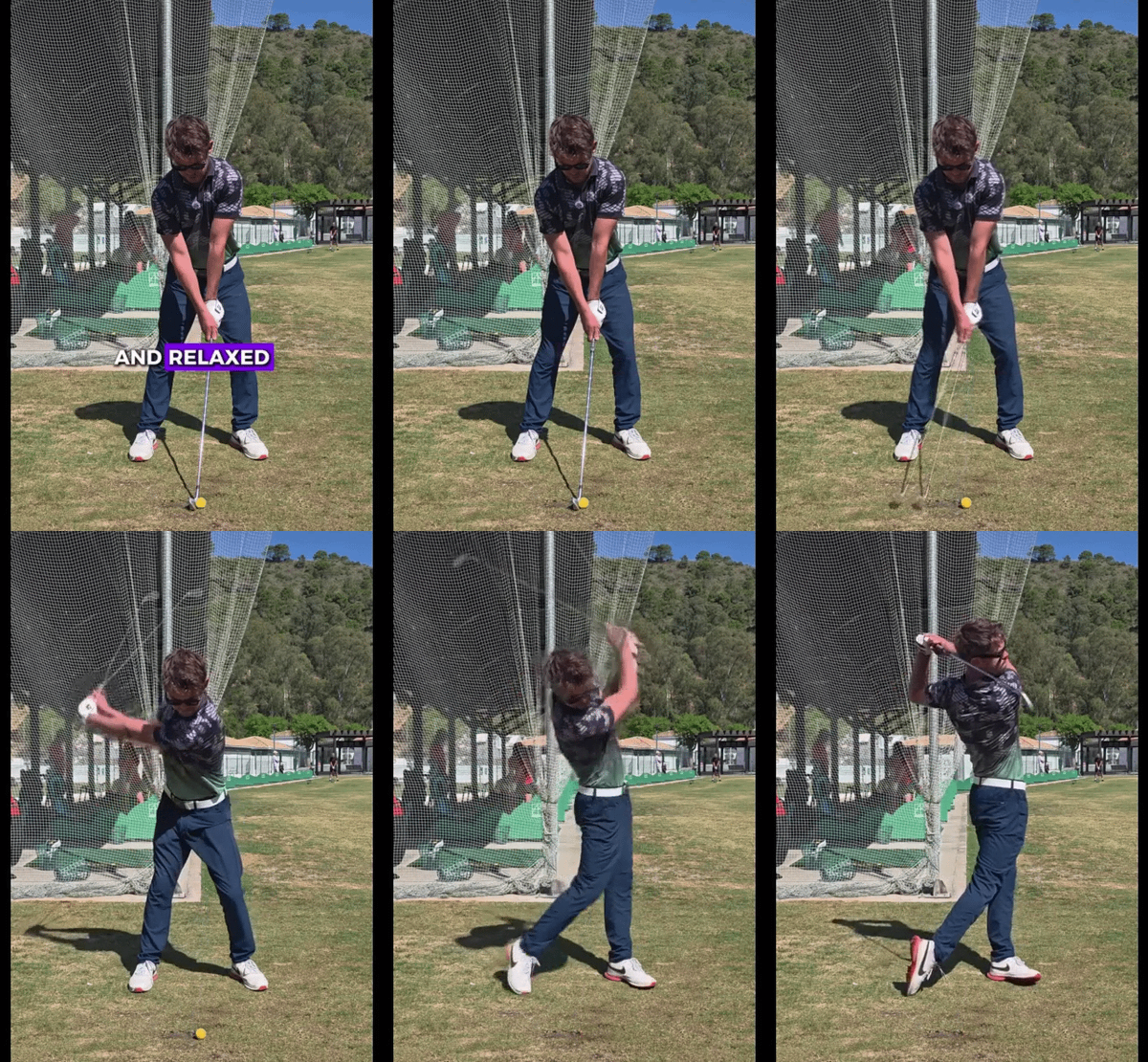
It happens so quickly that many people miss it. So, let’s slow it down and keep a close eye on the leading foot through impact or the swing bottom:
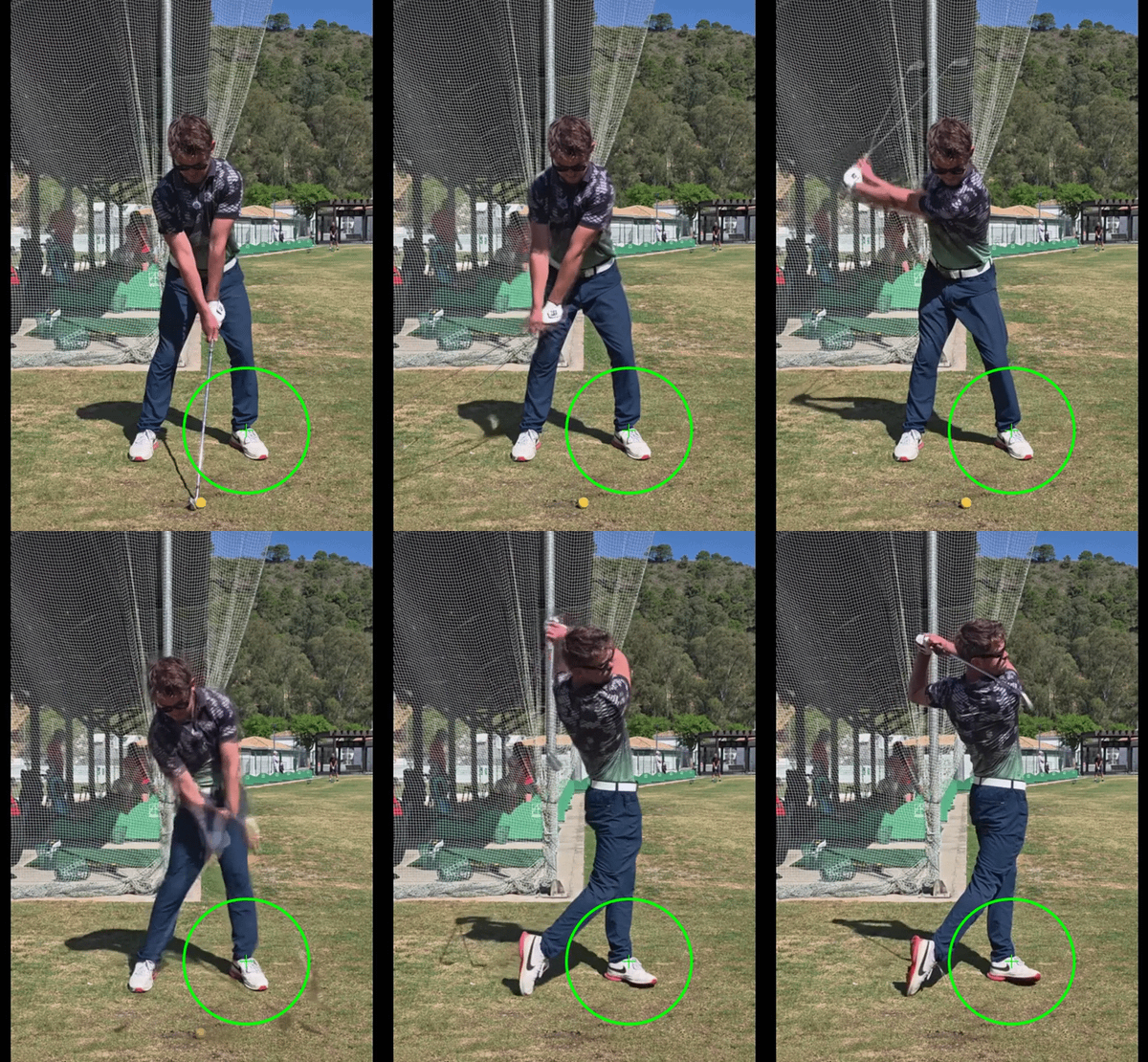
I’ve called this move the Flying Foot, when the entire foot leaves the ground as above, and you also have the Heel Spin:

… that’s Sam Snead, and it’s a pretty egregious move for such an accomplished swinger and player, but he didn’t do it all the time:
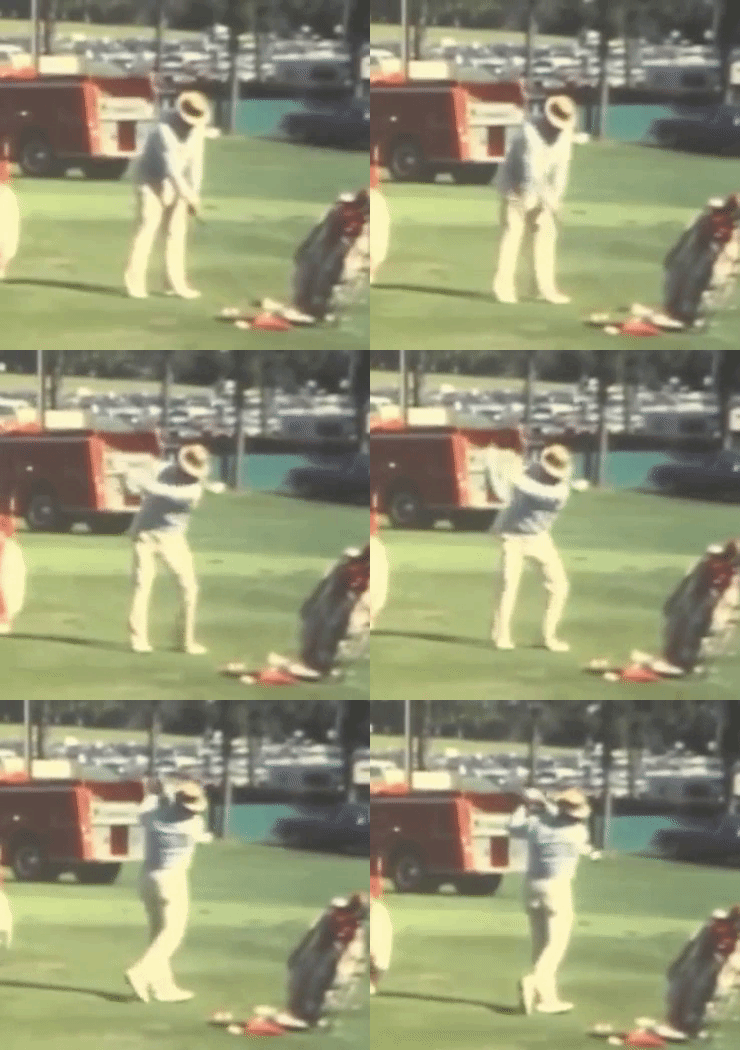
You can even see Jack Nicklaus doing it – I was illustrating something else in this below gif. but there is no missing the start of the Heel Spin as he get to the bottom:
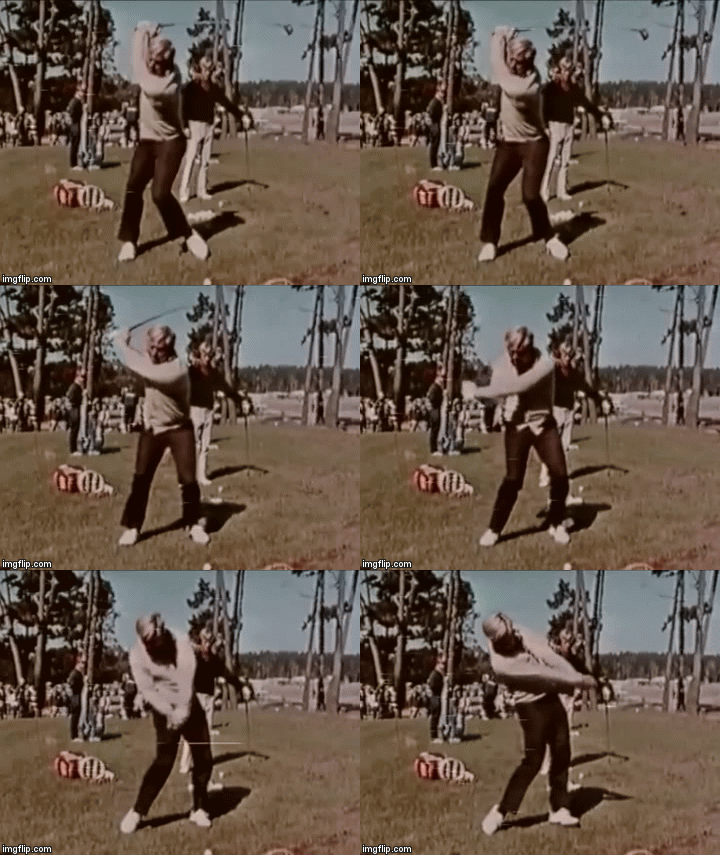
And it’s a flaw. There are no ifs, ands or buts about it. A mechanical swing flaw.
We stand over and swing to hit a ball that is not moving, which separates golf from baseball or cricket, where the batter has to react to a ball moving towards them at a high rate of speed, and at times will have to turn the body quickly without having time to set the feet properly.
It doesn’t even have anything to do with the flaring angle of the foot, because Mike Dunaway stood nearly square-footed to the target line and never had this type of instability in the leading foot:
As I said earlier, I was swinging in 2006 and had a Heel Spin because I simply didn’t understand the mechanics of the golf swing yet, being only a year into my swing research, and I wasn’t doing it anymore by 2007.
I briefly toyed with it again in the summer of 2008 after watching JB Holmes swing, but again, by the end of that season, I never thought about or tried it again, because by then, I was beginning to understand something about mechanics.
Even when swinging at speeds that produced over 180 mph ball speed, I didn’t have to fly my foot or spin on my heel to get turned to the finish:
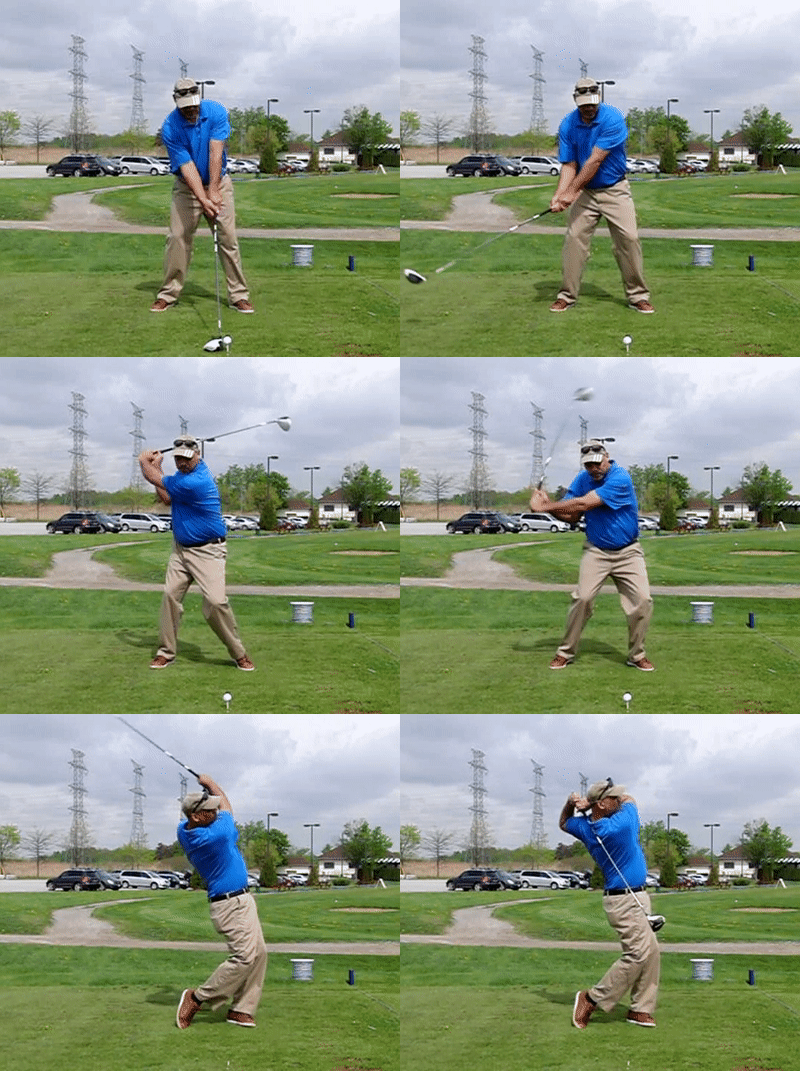
It greatly helps to have a nice flare to the leading foot, for sure – but again, look at Mike Dunaway to see that it isn’t the flare.
It’s the proper mechanics action coming from the top down and through, and it’s having the proper weight balance.
The optimal golf swing has no turn – it’s a back pivot and down swing, and while the club swings in a circular arc, you don’t have to spin in place to get through the bottom and to the finish.
If you do, then you have a swing flaw and any swing flaw will introduce consistency issues and raise the risk of injury.
Two great reasons to eliminate swing flaws when you have them.
Which brings us back to the pivot drills – they teach the proper weight transfer and motion so that one can perform the back pivot and then simply swing down and through without having to turn in place through the bottom.
Pivot, swing and turn. Not pivot and swing while turning.


George Knudson too 🙂