
 There is a peculiar thing repeating itself with Mike Dunaway similar to Moe Norman when I looked into their particular swing models.
Moe Norman, you see, became famous for his superhuman accuracy long before he developed the short half-swing for which he is now remembered.
He won the Canadian Amateur Championship in 1955 and repeated in 1956, and it was his two appearances as an invitee to the Masters tournament in ’56 and ’57 that garnered him the attention that continues to this day.
He didn’t swing the way people think of, however.
There are two swings of his from different angles that I can show you of the way Moe swung back in the 50’s, and they are like this:
Moe Norman – 1957
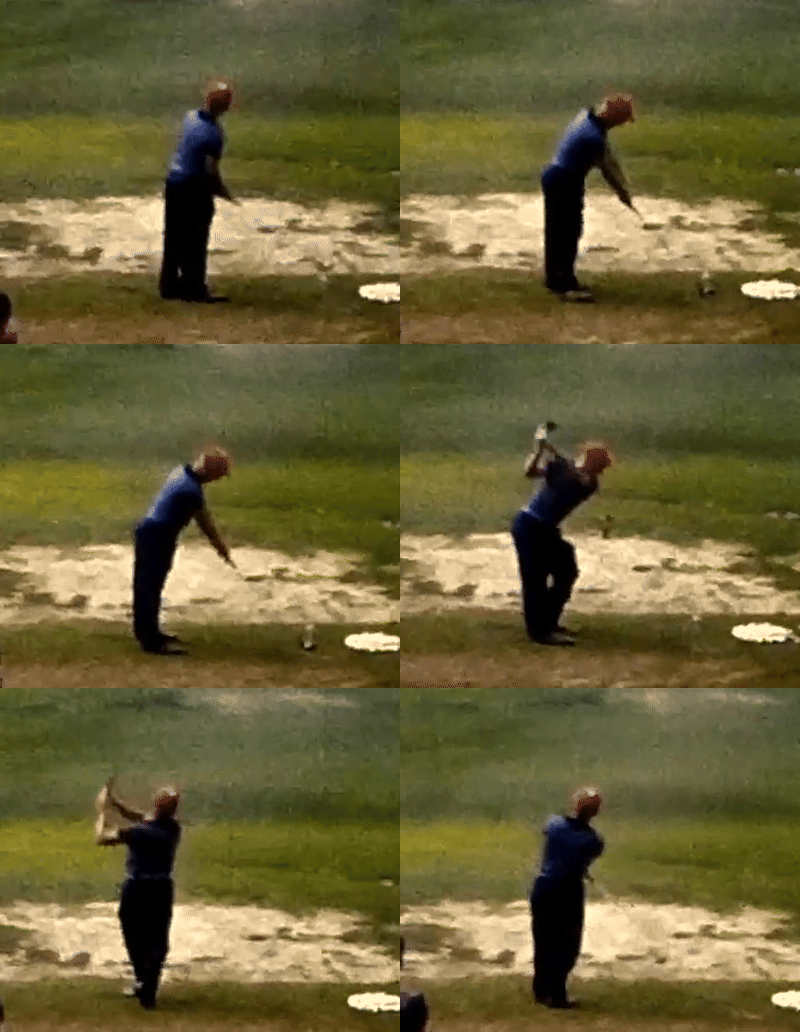
So you can see that, while his address still displayed a very outstretched arm position and a set club position quite far back of the ball, that golf swing model was a Classic Golf Swing model with a distinct lifting leading heel on the back pivot, with a sliding trailing foot release and a shocking slide and spin on the front heel post-impact, very Arnold Palmer-like.
But nonetheless a traditional Classic Golf Swing. Nothing like what people envision now when thinking of him:
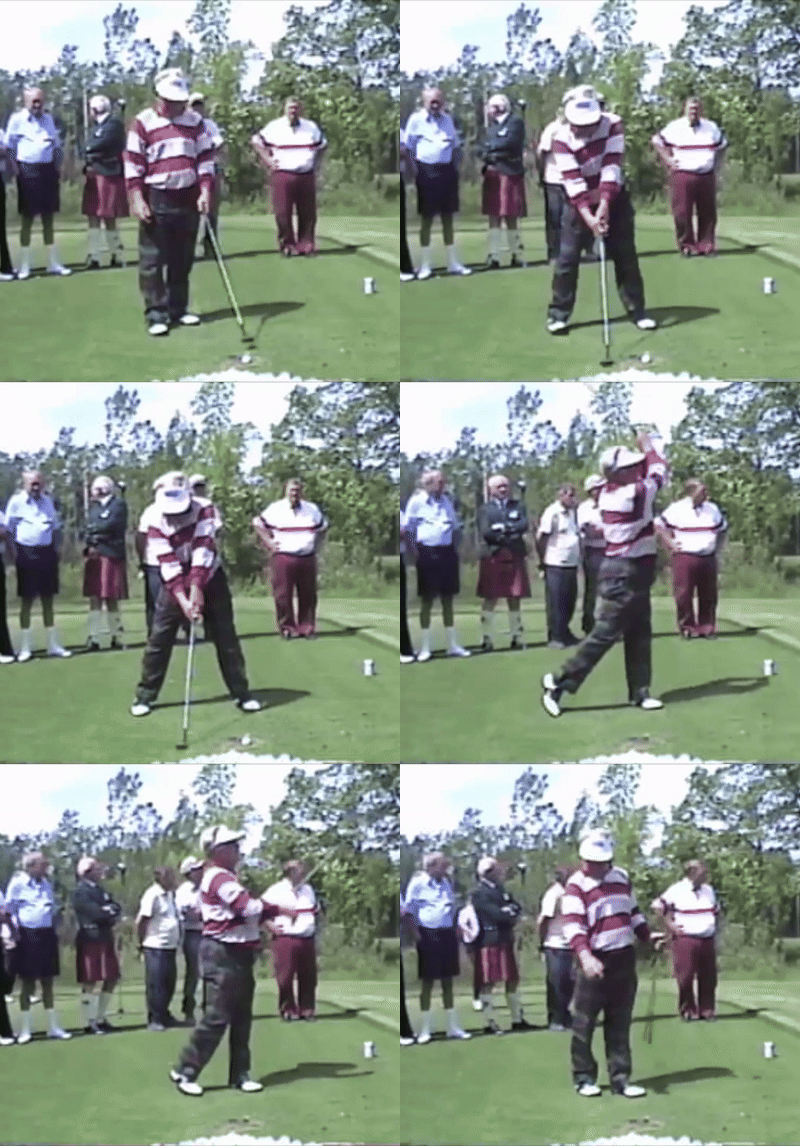
Now, I have always wondered what was going on with Mike Dunaway in the same regard, because he certainly changed his swing model over time.
He’s known for that flat top position and that delayed step-around finish this way:
“Austinology” Video circa 1998
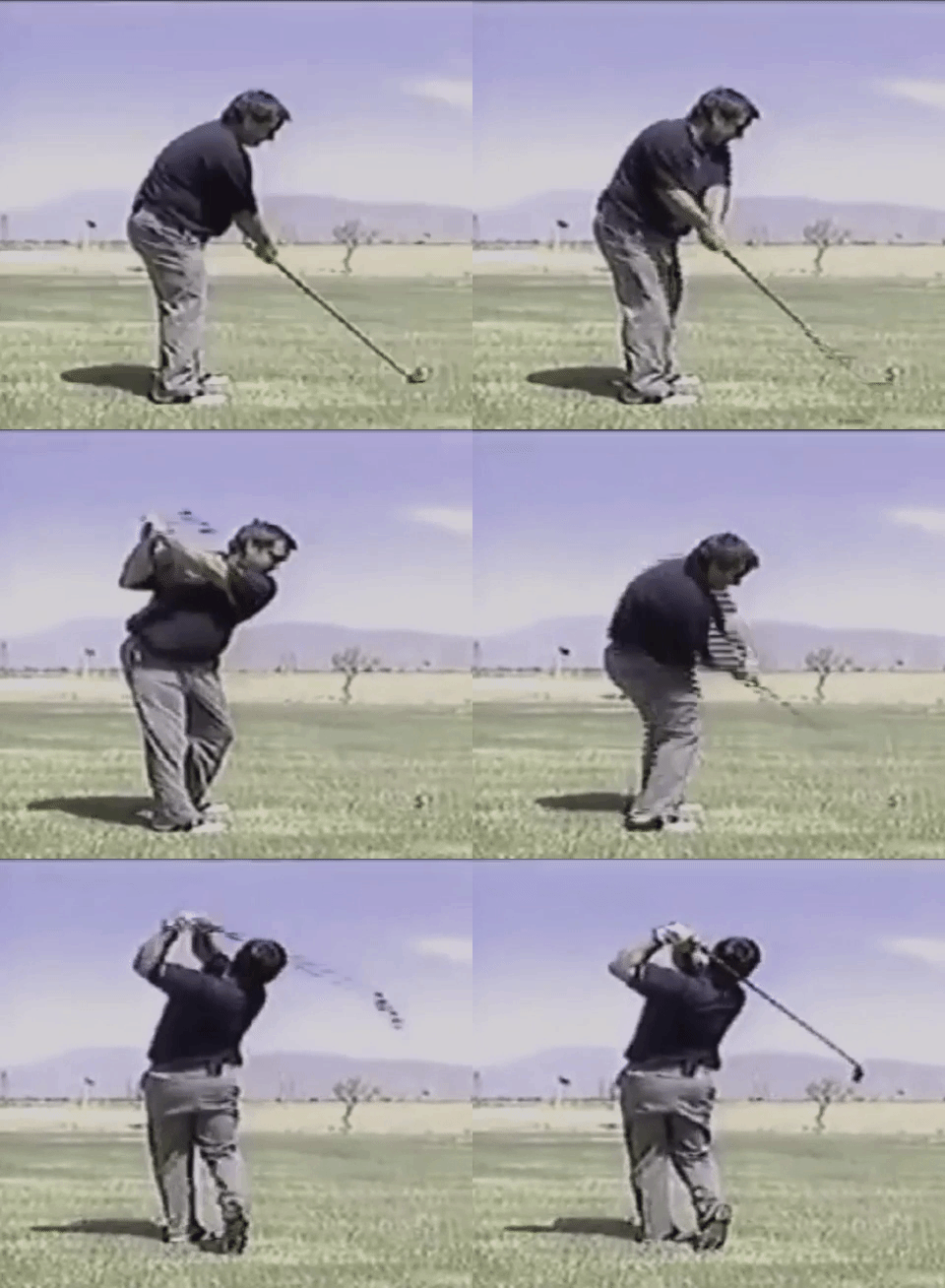
… and here in 2005:
Peace River Video circa 2005

… but once again, that wasn’t the swing model that made Dunaway famous.
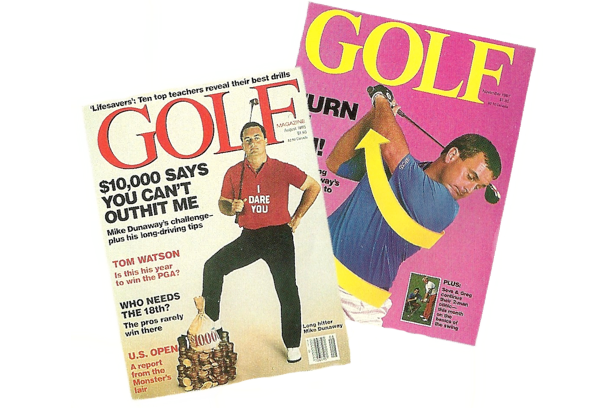
He started up his Club 350 group in the early 80s (you had to be able to drive the ball 350 yards or more to join), and he was featured on the Golf Magazine cover twice, first in August 1985 and again in November 1987:
… and he would have been employed in the early 90’s as Callaway Golf’s lead tester for the Big Bertha driver – so by the early 90’s, he was famous enough with his long driving prowess to have gained Callaway’s attention.
Imagine a long driver testing clubs that would be used by amateurs and pros to play golf, not to compete in long drive competitions – that tells you he had a pure swing in addition to being so long.
So, what did his swing look like at that time he was becoming famous?
It looked like this:
Mike Dunaway in Sybervision’s Golf Swing Video 1988
Do you see that hip and leg action?
Here it is from the rear view:
Late Hogan Pivot Action & Sliding Release

That is not the Shift & Post action of his later years – in this swing model, he swinging the same way I’ve isolated in the transitional pivot model that I call the “Late Hogan” pivot and which I featured in the “The Basics Of The MCS Golf Swing” video that you have downloaded!
I guarantee you, if you go to the pivot drill section of that video and watch Dunaway’s swing and pivot action in this Sybervision video, you will see exactly what I describe when I instruct how to do the pivot drill.
I have already said years ago that Dunaway’s earliest known swing action on video, which is here in the Sybervision video, was a rotary swing action and not the Shift & Post for which he was famous.
You can clearly see that, although the hips do tilt, they rotate in place and Dunaway displays a very subtle degree of leading heel lift on the back pivot and his head is nearly stable laterally, with only a tiny amount of shift.
Not only that, there is no delayed step-around finish but rather the familiar Short-Stop Slide release action I’ve had in my own swing forever.
Take out that head shift and this is exactly how I would want to swing with the Late Hogan pivot – I only just identified and isolated the pivot action in the last year, as you know, when I was off swinging because of Frozen Shoulder and was analyzing swings again in detail.
Now that I have been practice swinging and working on that model with the Late Hogan pivot action, I would say that I want to look nearly exactly like this swinging with the same pivot action when I’m back to 100% swing fitness:
Down The Line
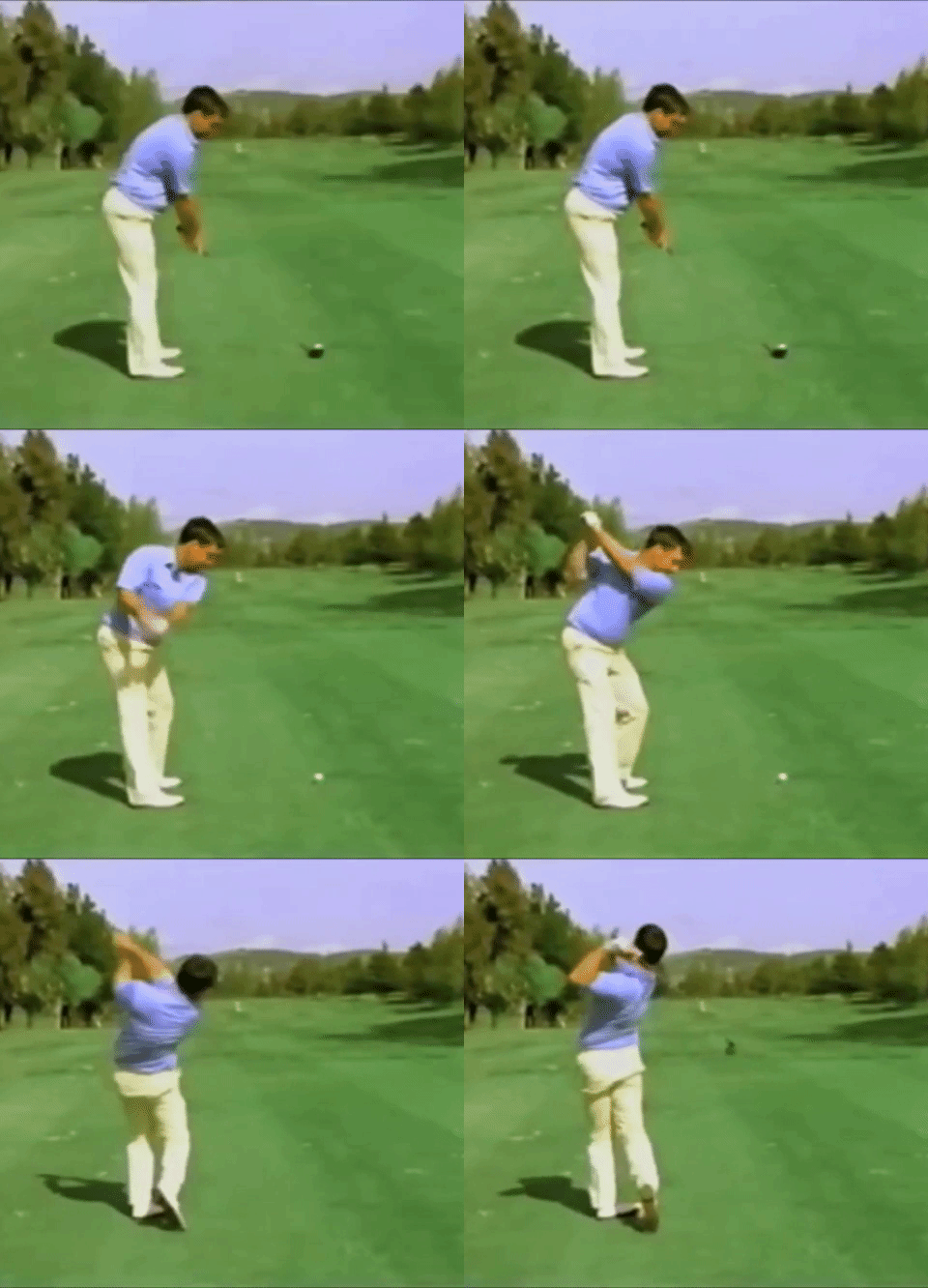
Up The Line
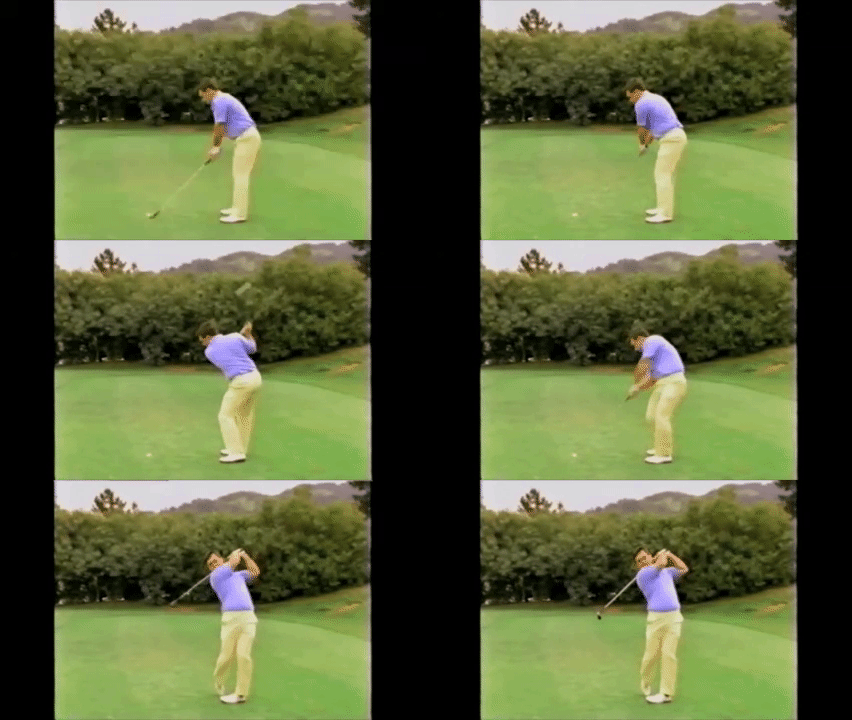
It’s the same pivot action as the one I’ve performed, just with a flatter top position and much tighter action all-round:
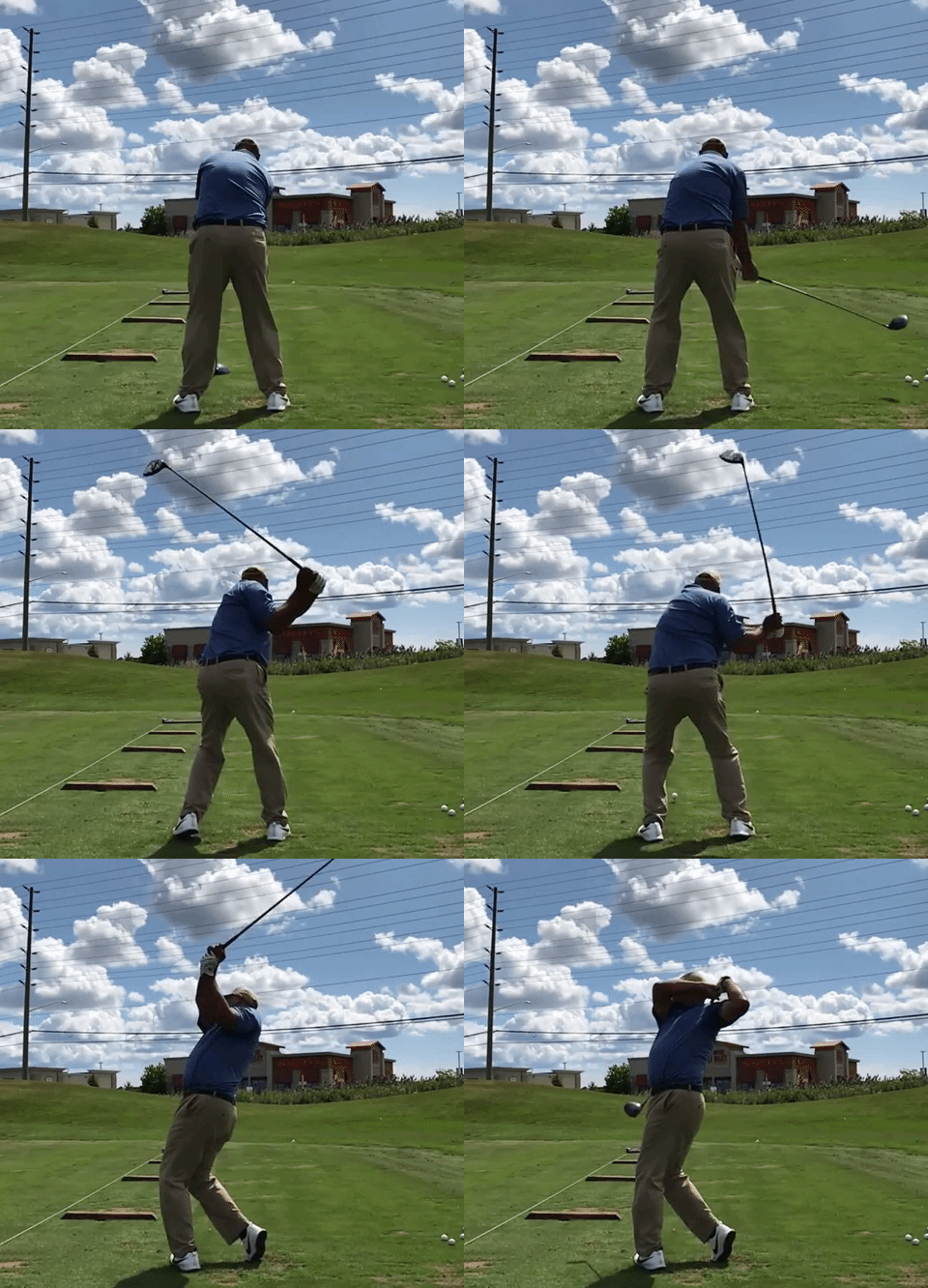
So, if you’re looking to see just how powerful this pivot action is, remember that Mike Dunaway rose to fame swinging in this fashion.
Also that I, at age 47, was able to generate close to 190 mph ball speed swinging with the same pivot action with an old Ben Hogan CS3 driver and range ball – after already having hit balls for over an hour before I got out the radar device:
DJ In 2017

 WAX Golf
Now a conversation between Mike Dunaway and Moe Norman would of been interesting. It’s a crime it never happened. The world needed Mike Dunaway and Moe Norman on the range in video together.
Regardless of technique, two of the greatest ball strikers of all time.
One the unparalleled marksman, the other the longest and straightest ever.
irl I have heard Moe Norman discussed irl recently by people at Golf, just need to make Mike Dunaway more known lol and George Knudson. I’m doing my bit where I can haha
People don’t hear about MD nowadays because Long Drive is a joke competition and Callaway no longer makes the Big Bertha.
Oh yes, and the fact that for many people, golf didn’t exist before the Tiger Woods era. The 80s are so yesterday.
Yh I’ve only met one coach (One I see once a year because he’s a good guy, and because of his encyclopaedic knowledge of Golf history) who knows about Mike Dunaway, Knudson, Burke Jr etc All pros at my club (two are pga trainees) straight up told me they’d never heard of any of them and just follows the modern players rofl Now THAT is the problem in full view