
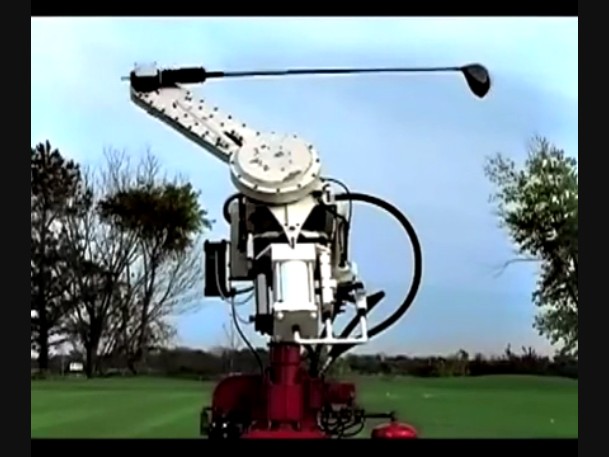
 In going over the Post-Modern Golf Swing pivot and swing action, it suddenly dawned on me what should be or perhaps should have been obvious with regards to stability and machine-like performance.
The Classic Golf Swing, for example, is mechanically-correct and sound, because the body is moving the way it is designed to move when swinging from a certain setup.
The lifting leading heel on the back pivot and the lifting trailing heel into impact or the swing bottom work to allow the hips to fully turn both on the back pivot and into the down swing, and so you get a great result if you can perform this pivot with a stable head.
Fixed Fulcrum

The whole notion of the stable head is to reduce the reliance upon hand-eye coordination and simply allow a swing from a fixed fulcrum – how much can go wrong with that, when performed correctly?

How do you make that better?
Well, how about a Classic Golf Swing that works with a slightly adjusted setup and pivot action so that you get the same fixed fulcrum but with less leading heel lift?
The Late Hogan Pivot (Transition Swing)
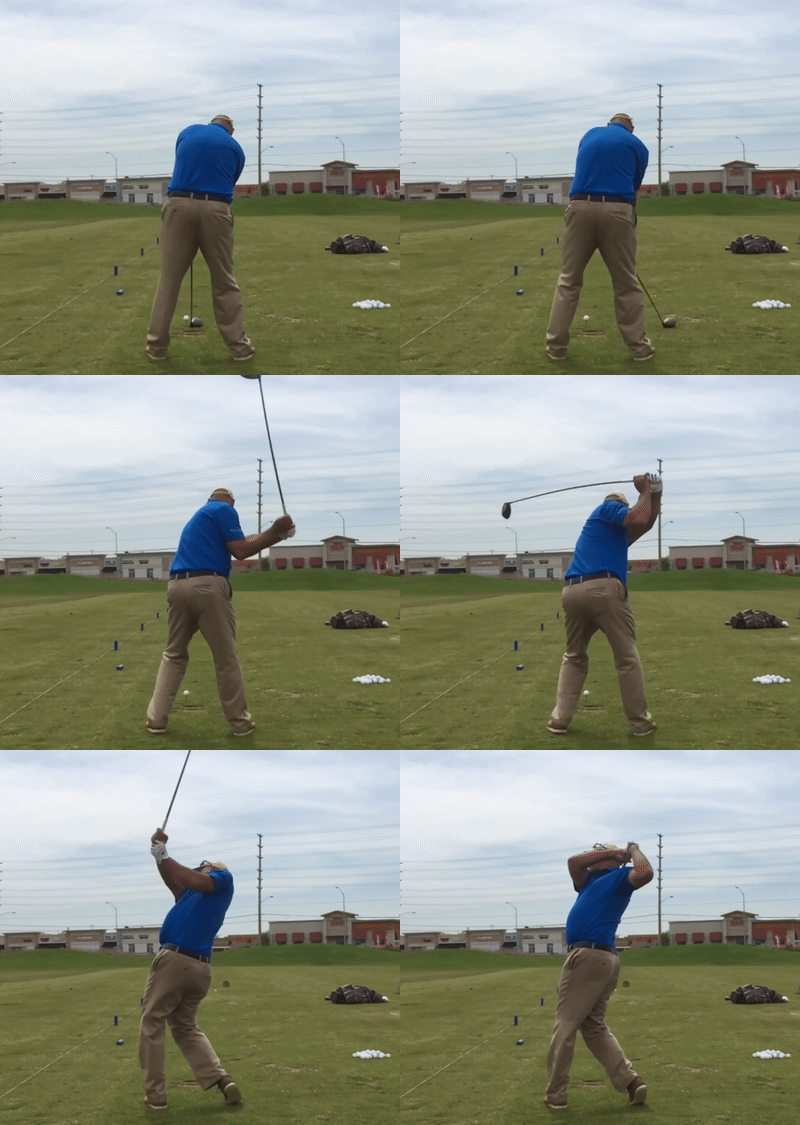
More stability, right? The idea of the Modern Golf Swing had the proper motivation – less moving parts – but was fatally flawed in its conception and execution because the first law of kinesiology is that you move the way the body is designed.
Failing The Test
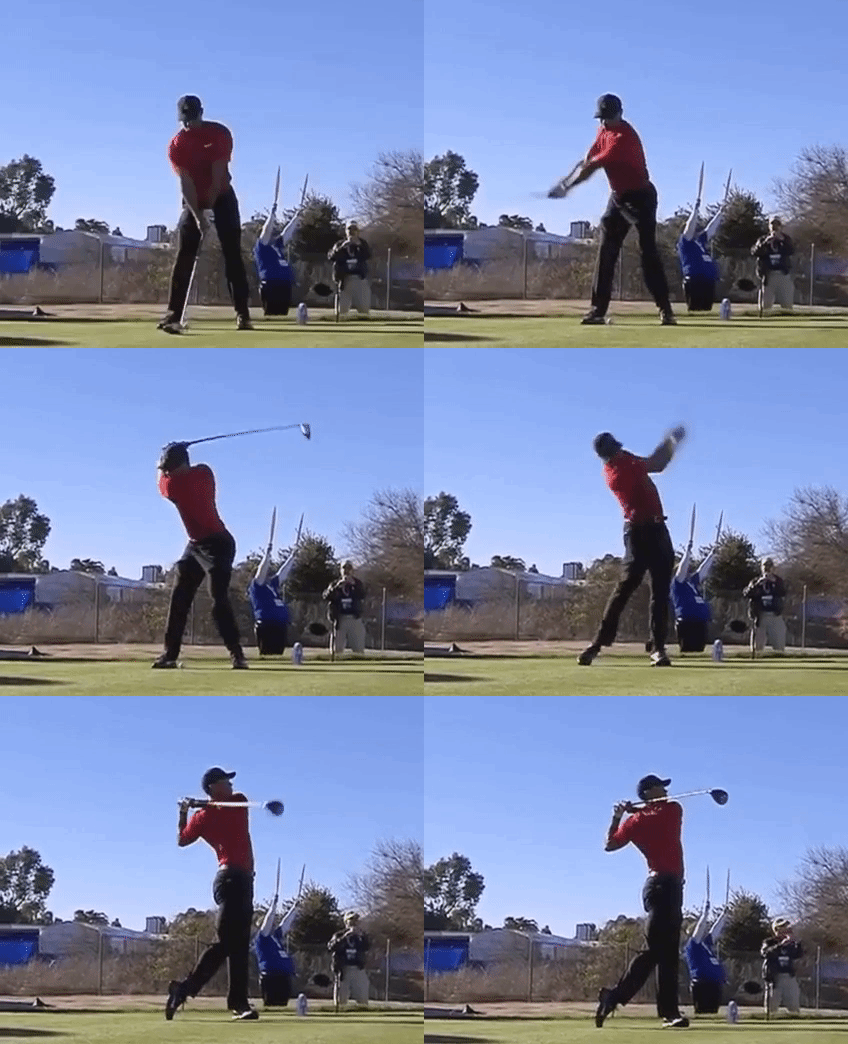
The body is not designed to hyper-twist the lower back (back pivot) nor to hyper-extend the leading knee (impact), so it fails right out of the gate.
And I don’t know about you all, but that swing of Tiger Woods above doesn’t look to me like “less moving parts” what with the shifting head, the harpoon drop on the transition and the twisting around of the leading foot through impact. Just saying.
So, a Classic Golf Swing with less heel lift but still retaining the free hip and leg action for the pivot, that’s an improvement on the traditional Classic Golf Swing, I would say.
Now, how about a golf swing model that has a fixed fulcrum, free hip and leg action with a full hip turn, but which has both feet remaining firmly on the ground throughout the entire swing from the start of the back pivot to impact?
If there is no restriction in motion, no twisting of the lower back, no hyperextension of the leading leg into impact, and still functions like the Classic Golf Swing, only with complete stability, how good would that be?
Again, looking at Mike Dunaway down the line to remove the visible head shift, how do you improve this motion with regards to stability, leverage and consistency?
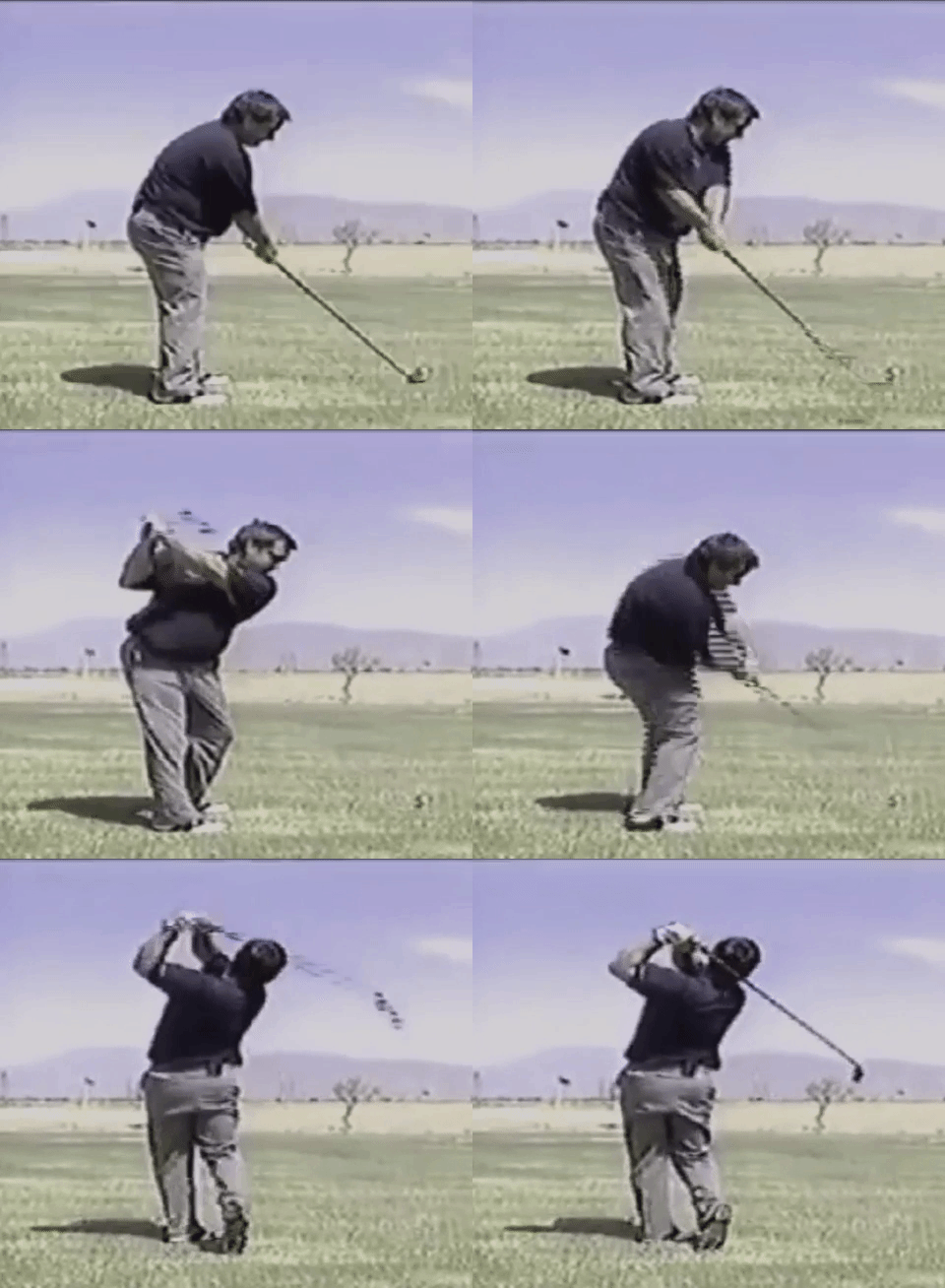
Mike Dunaway was a great athlete and was able to overcome the disadvantage of a shifting head on the back pivot (a moving fulcrum), because when he started down, that head did remain stable:

… but if a moving part isn’t required to perform a swing – say, a shifting head on the back pivot – why wouldn’t you just remove it?
And that’s what I’ve been working on – the Post-Modern Golf Swing with a fixed fulcrum – and I don’t think it’s possible to improve the mechanics of such a model.
If the feet don’t move, the head doesn’t move (between address and impact), and you don’t have to do anything harmful to the body to get this, how do you improve it?
Now, don’t get me wrong – you can play great golf and be a great ball-striker with any of these three models, and I would never claim otherwise.
What I’m saying is, for the purpose of maximum performance, you can progress from the first model through the third, and all else being equal, you should have an improvement in performance metrics.
I would have been perfectly happy to learn to play golf with a proper traditional Classic Golf Swing, but since I couldn’t find anyone to teach it to me, I had to figure out all of this stuff for myself.
Along the way, my journey became one of finding the absolute best golf swing that one could have, mechanically, both for my own satisfaction and to hopefully benefit the golfers that come to the game after this terrible Modern Golf Swing era has passed.
 WAX Golf
I think you’re really on to something with the post-modern golf swing. Whilst the classic golf swing is beautfiul and so natural, in terms of swinging consistently, it requires a lot of practice and rhythm to do. Not easy to do if you’ve had major treatment (in my case) or you have a busy life. Whereas the post-modern golf swing is not only easier to learn, it’s so much more efficent. And it can also be beautiful to watch as the Mighty Mike Dunaway shows.
Also that Tiger Woods clip looks so painful especially his violent down swing….eesh! Don’t follow somebody’s path just because they’re succesful
Funny you mention that, AK – people get very defensive and touchy regarding TW’s swing. Never mind he’s destroyed his body swinging this way.
I actually was going to say something about it but backspaced it out before posting.
He’s a great champion, one of the greatest, but that swing is a dog’s breakfast.
Great golfer, awful swing.