
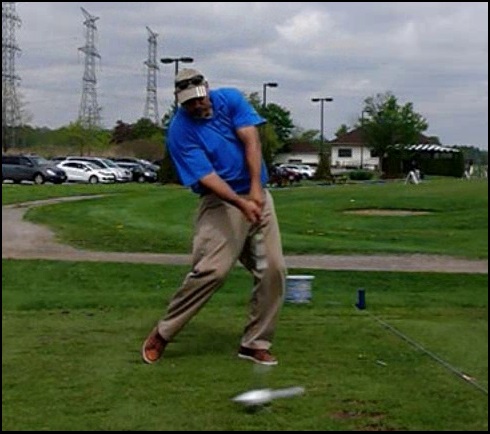
 As the title states, there are Classic Golf Swings and there are Classic Golf Swings, when you are talking about models and technical acuity.
As you all know, I only ever really talk about swing mechanics here on the blog, with occasional side topics, but mostly swing mechanics.
I’ve never said someone who had a great swing didn’t have one just because they didn’t win a bunch of majors (George Knudson), or tried to argue that someone had a great swing just because they won a bunch (Tiger Woods), because the swing is only one facet of the game.
Scottie Scheffler is a great golfer, Tiger-Woods style – horrific swing mechanics, but gets the ball in the hole faster than the competition over 72 holes.
Arnie Palmer is an example of a great player, legendary winner and competitor, but his Classic Golf Swing, mechanically speaking, was half power and half chaos:
He had a great pivot action but that heel spin post-impact and the helicopter finish tells you that he was always holding off a big snap-hook, so he released late and did the ballet spin.
Great ball-striker, iffy mechanics. Which is why I’ve got no swing gif.s of him and had to post the YouTube Short above. I’ve never had any desire to showcase his swing, but he also got the ball in the hole.
Jack Nicklaus had one of the greatest Classic Golf Swings from start to finish, but he could also be careless with his footwork, and at times in his career, looked a mess:
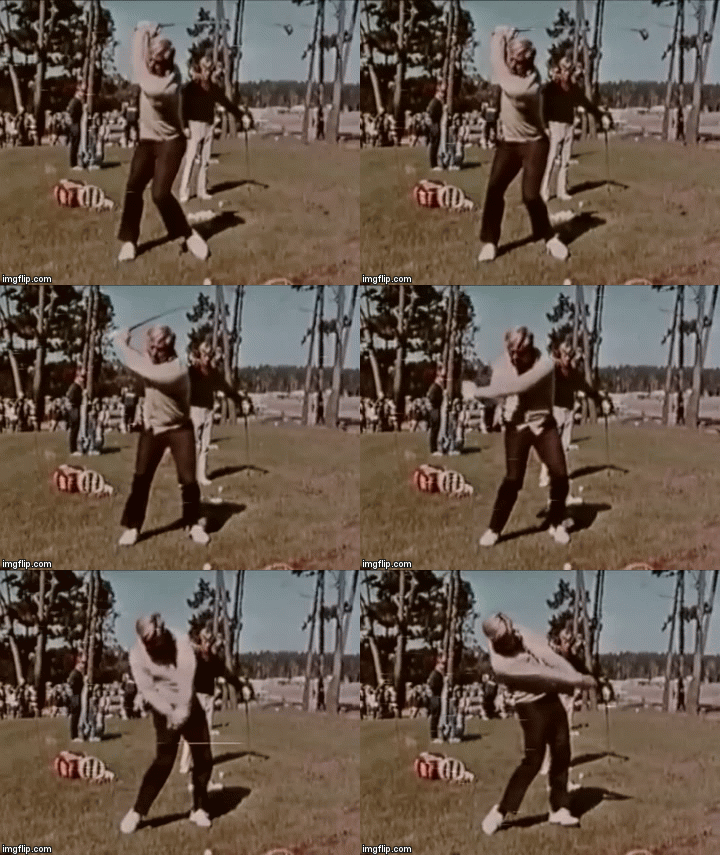
The point I’m making is that, since we swing from a stationary address to strike a ball that isn’t moving, it shouldn’t be that hard to position oneself in order to make a proper swing and finish in a balanced position with no extra-curricular foot action or what-have-you:
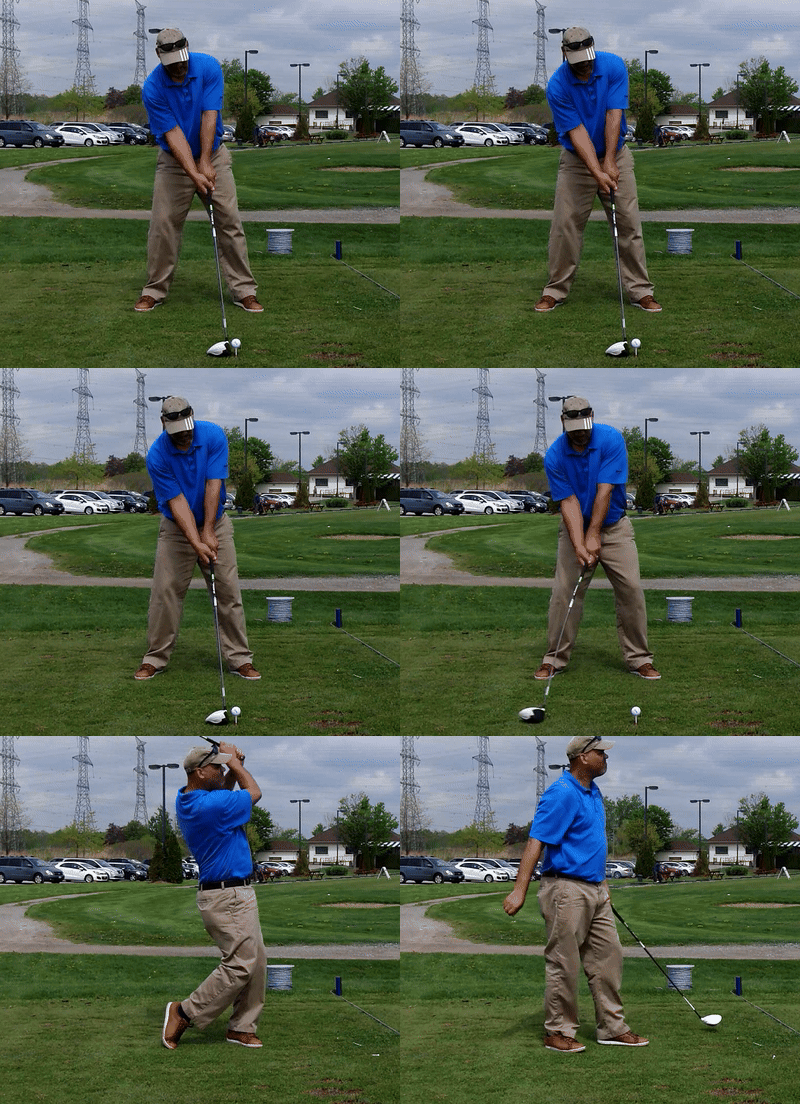
It also means, like above, you don’t try to remain rooted in place with the trailing foot.
In a mechanically-proper swing, if you have a wide enough stance, the transfer of weight to the leading foot with the hip turn to the finish means you will hurt yourself anchoring the trailing foot, so you see this kind of nonsense even in a Classic Golf Swing action:
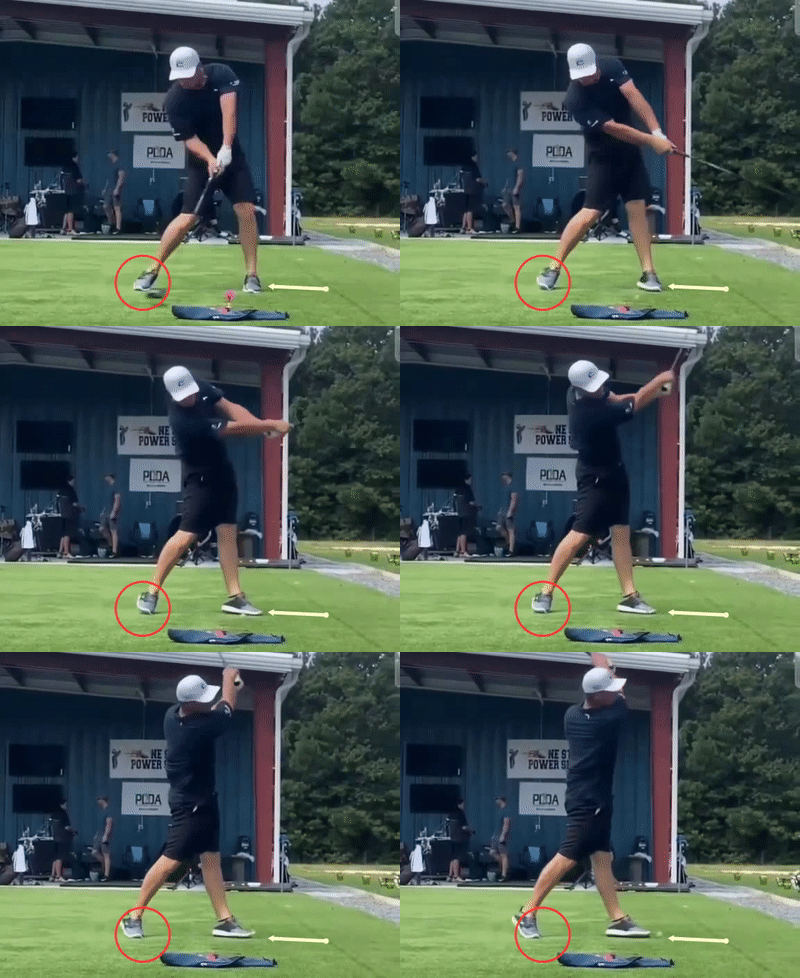
I don’t know who wrote the law “Thou shalt not release the trailing foot at all costs,” but it is the one thing I keep seeing from even world-class golfers, and it’s very annoying because it’s unnecessary.
You should also be able to swing with a model that provides for head stability on the back pivot to the top for consistency:
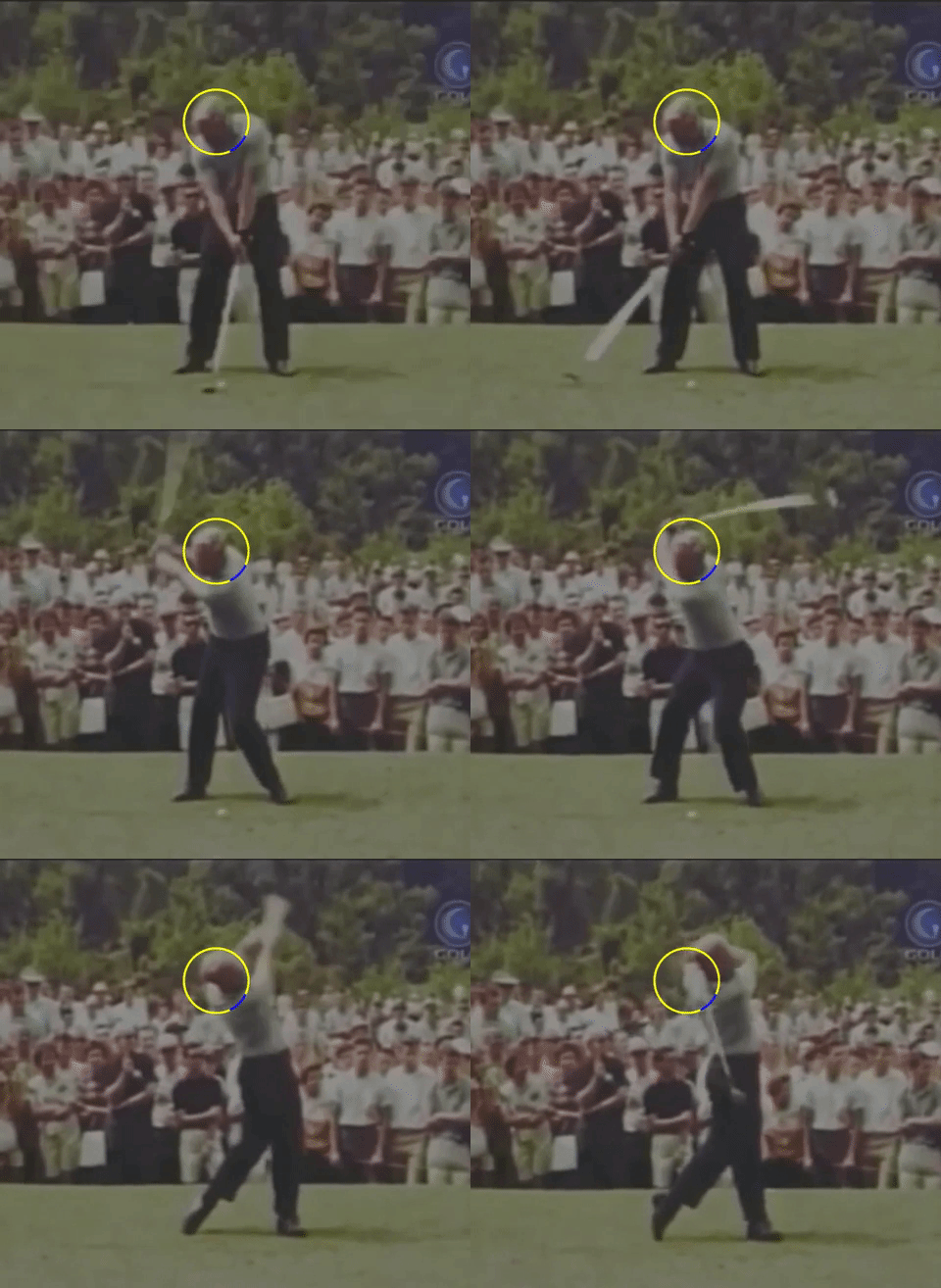
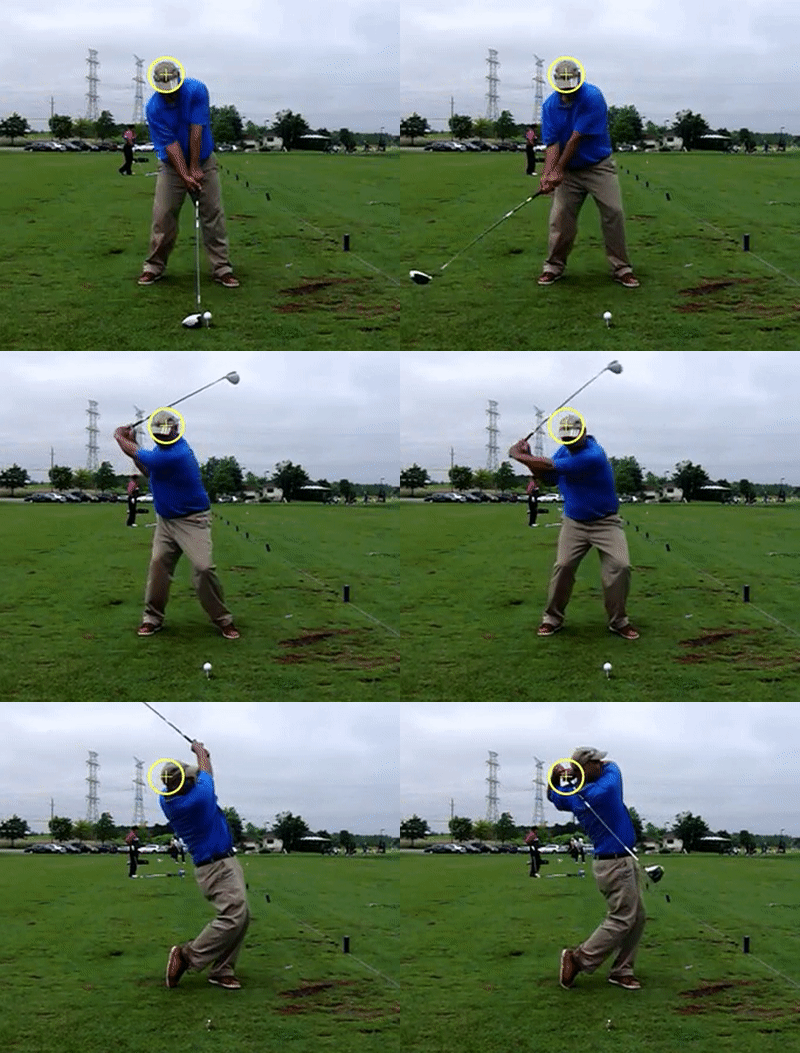
There may be some head motion on the down swing due to a swinger’s various idiosyncrasies, such as mine moving slightly toward the target and down on the transition because I was swinging left-dominant in the below clip, but the back swing pivot should definitely have a stable head:
The Classic Golf Swing, in its optimal iteration, should also be a vertical motion and not a lateral one – you swing up and back, and down and through, not from side to side:

In this regard, swinging with a vertical and not a lateral action means you remain balanced in place throughout the swing, what I have called “swinging in the box” when in motion:

And of course, you swing with a proper ball positioning system for all clubs, from the proper setup, so that you’re just swinging up and back and then down and through, from wedge to driver, without having to make compensations either on the back pivot or the down swing:
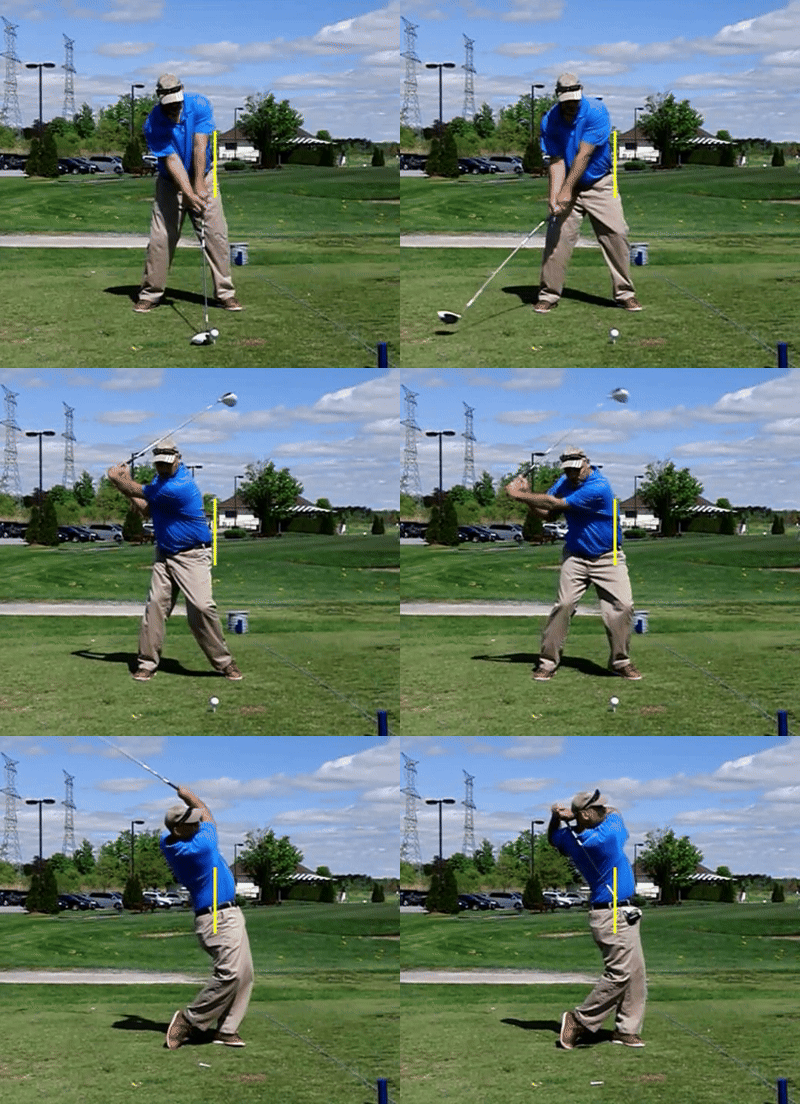
Just one smooth action back and then down and through, as if you’re just making a practice swing, but there’s a ball that happens to get in the way.
When you combine all of those elements, I can tell you that you don’t have to be a world-class golfer to have a mechanically-sound golf swing that produces speed, power and precision.
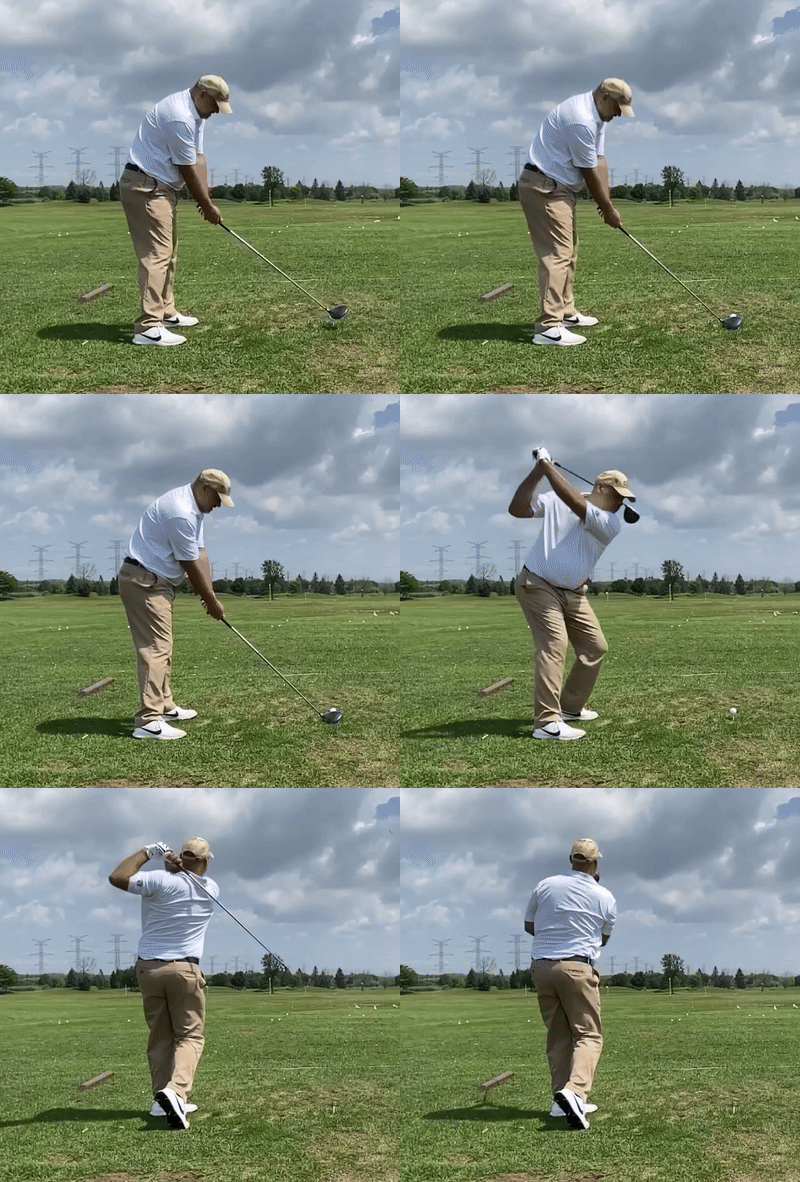
I was able to exceed 180 mph ball speed with a Classic Golf Swing action in my mid-40’s and that was without hitting a million balls per day or working out – pure leverage and letting the swing model do its thing:
183 mph Ball Speed @ 45 Years Old – 2015
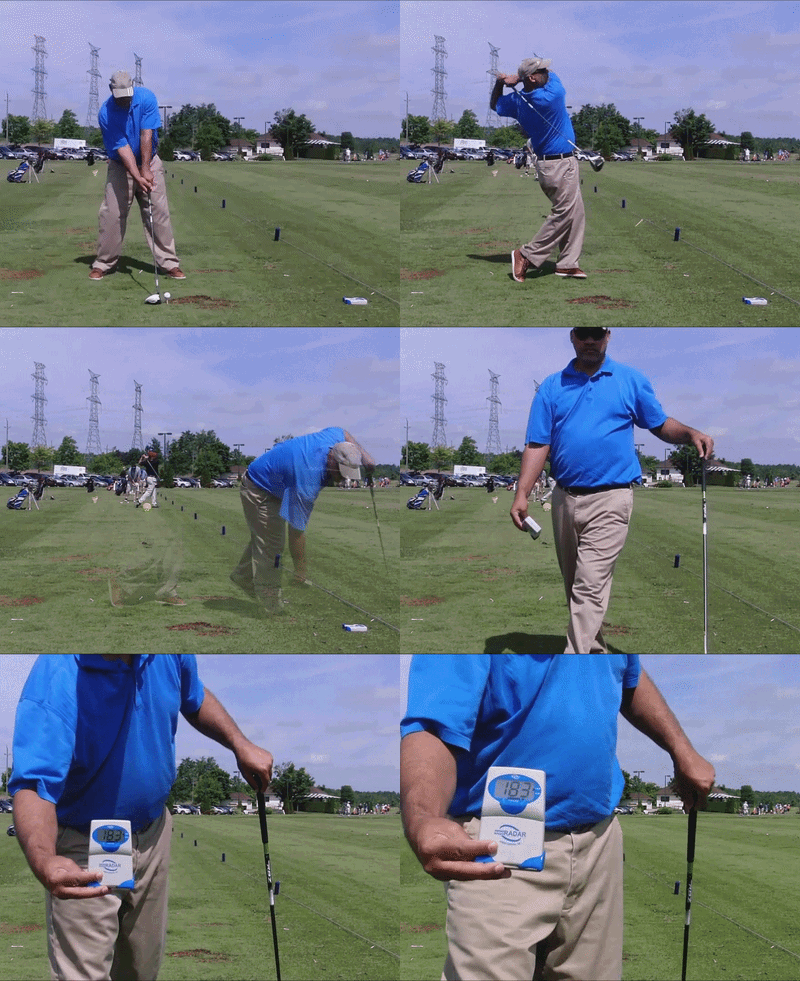
As you can see, a middle-aged dude who could lose a bit of weight (or more), who doesn’t do anything in the way of strength training or conditioning – leverage is a powerful thing when you know how to apply it.
I’ve not really “invented” a swing model – what I did was to take a sculptor’s model of clay and, looking at all of the great swingers of the Classic Golf Swing, I filled in what they did in common and then removed their idiosyncrasies until I had a generic swing model.
I then used more swing analysis and a little bit of athletic intuition to chisel the model down to the basics of what one should know and do to build a mechanically-correct golf swing model.
So, I will take some time to plot out a very simple and basic tutorial for the traditional Classic Golf Swing model that I developed years ago before moving on to the Late Hogan pivot model (and currently working on the Post-Modern swing model based upon Mike Dunaway’s swing mechanics), and then I will get this video done and available to everyone this coming month (June).
I’ve already figured out the easiest possible pivot explanation and exercise for you all, and you will get this very quickly if you believe and understand that the Classic Golf Swing doesn’t require twisting the lower back, keeping the leading heel nailed down, or jumping and flying around through impact.
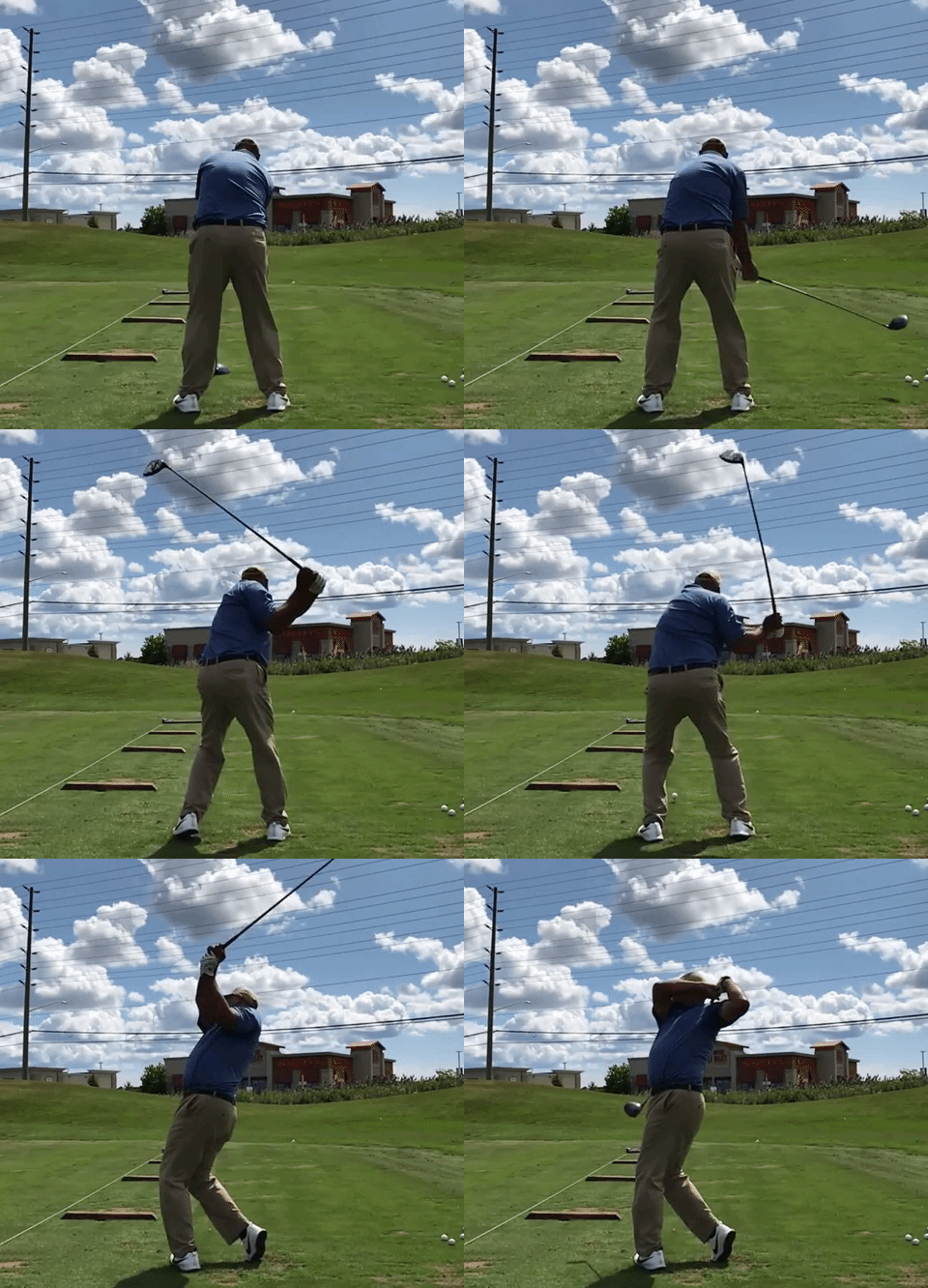
It’s all in the hips and legs, and your back will thank you for it if you’re swinging in the Modern Golf Swing methodology, and perhaps even if you’re trying to swing Classic style but haven’t quite worked it out.
 WAX Golf
Ahem – a little correction – I said I would have the video out “this month,” but what I mean was “this coming month (June),” I’ve edited it and my apologies for the error.