
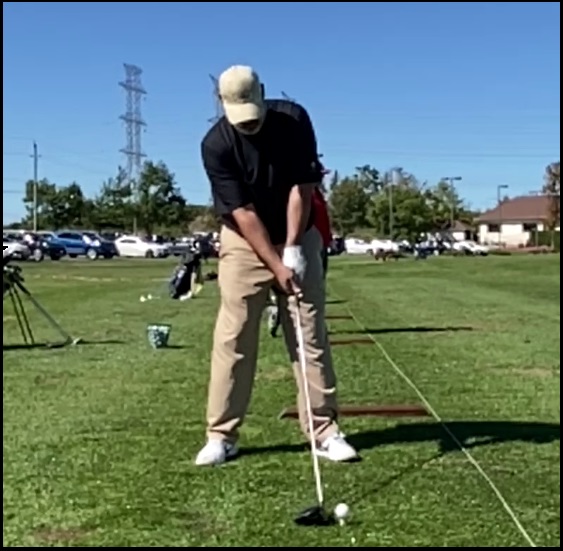
 I deal with my title statement about other peoples’ swings, here is the thing about models.
From my experience in other sports like hockey, baseball, track & field, basketball etc., I know (outside of the golf world, apparently not so much inside it) that there is such a thing as kinesiology.
There is also a reason I am so harsh on the Modern Golf Swing and its proponents – they violate the principal tenets of kinesiology.
Here is a summary of the definition of kinesiology as given to me just now by Google’s Gemini:
Kinesiology is the scientific study of human movement, applying principles of anatomy, physiology, biomechanics, and psychology to enhance health, wellness, and athletic performance. It focuses on how the body moves and adapts to exercise, aiding in the prevention and management of injuries and chronic diseases.
That part I have bolded and underlined is the reason I’m so unrelenting and merciless in my critique of the standard Modern Golf Swing and its follies – it is not mechanically-sound, it causes unnecessary injuries and damage to wellness, and it does not enhance athletic performance.
For that reason alone, I have stated this of anyone who has a degree in kinesiology and who deals with anything to do with the standard Modern Golf Swing (which involves making back swing pivots with restricted lower body action, nailing both feet to the ground and twisting the lower back to increase shoulder turn) – their degree isn’t worth the paper upon which it’s printed.
It is akin to having an accounting degree in the United States and not following the GAAP guidelines – worse, you have an accounting degree and can not describe or recite the guidelines in GAAP – how much is that accounting degree worth?
It’s that simple to me – you either know what you’re talking about, or you don’t.
If you a swing instructor, therapist or trainer working in the golf universe with a kinesiology degree, and you blithely go along with the destructive pillars of Modern Golf Swing mechanics, either because you don’t even know that it is physically harmful or because you know your income depends upon you ignoring it, you are violating the very tenets of the education that earned you a kinesiology degree.
I wish I could put it more gently, but the facts are the facts. There are real-life consequences from this failure of sport science in the golf world.
Tiger Woods is the most famous victim of the lack of mechanical-soundness in the Modern Golf Swing, and he has been greatly harmed adhering to these principles during his life – just about every physical ailment he has had to endure surgery for outside his automotive life spring directly from the way he has swung a golf club.

The golf instruction industry failed him – and just as the world likely wouldn’t be talking about Jack Nicklaus if Ben Hogan hadn’t had a run-in with a Greyhound bus entering the peak of his career, we likely wouldn’t be discussing anyone other than Tiger if he had learned a mechanically-correct Classic Golf Swing.
I might add that Tiger himself is part of this failure – at a certain point, with all of the history of great golf swings and the science available to him from the 90s on, you would think he might have figured out how to swing a golf club properly on his own if he wished to stay healthy.
Let me segue now to the first part of the title – I don’t want anyone else’s golf swing.
We know from kinesiology that there are certain motions we can make with our joints, and because there is a variation of different motions we can make with those joints, we can swing a golf club, even when mechanically-correct, in a hundred different ways.
Take the different pivot actions I’ve discussed. All are mechanically-sound, so why one over the others?
The word we want here is “optimal.”
We have the wrong way to move our joints (hazardous and harmful), the proper way to move, and out of a variation of proper ways to move, there is the best or optimal way to move.
That goes for high jump, sprinting, throwing techniques, etc.
So, I don’t want Jack Nicklaus’ swing, nor Ben Hogan’s, not even Mike Dunaway’s golf swings.
I use these gentlemen’s names because certain aspects of their swings are close to if not optimal, and it helps to paint a picture of the optimal golf swing to talk about those aspects with regards to the people whose names I mention.
Jack Nicklaus had a great golf swing, but I don’t want it – he had a mechanically-correct and powerful swing with a pivot action that was also mechanically-correct, but not the best one – the only thing I want from his golf swing is his recommended setup, and not because it’s Jack Nicklaus. It’s because, after all of my research on the setup, I can point to this:
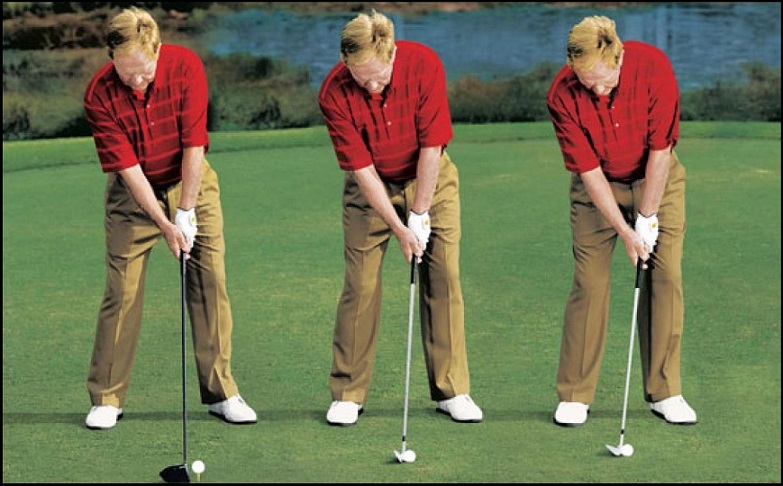
… and say, “this is how you want to set up over the ball before swinging.”
The setup is a component of what I would call the optimal golf swing model. You don’t have to nail it exactly to be a good swinger and ball-striker, but the closer you get to it, the better the odds of being a good swinger and ball-striker.
I don’t want Ben Hogan’s golf swing either – great ball-striker, but what a mish-mash of idiosyncratic moves he built into his swing. No sir, none of that – but his late period pivot action:

… as good as it gets, and if you could combine that pivot action with the setup that I believe is optimal (the “Leaning A” setup, which mirrors Nicklaus’ recommended setup), you are in really good shape, as long as you don’t try to shift off of the ball and back into it the way Hogan swung.
That’s asking for disaster, as Rory McIlory can tell you:
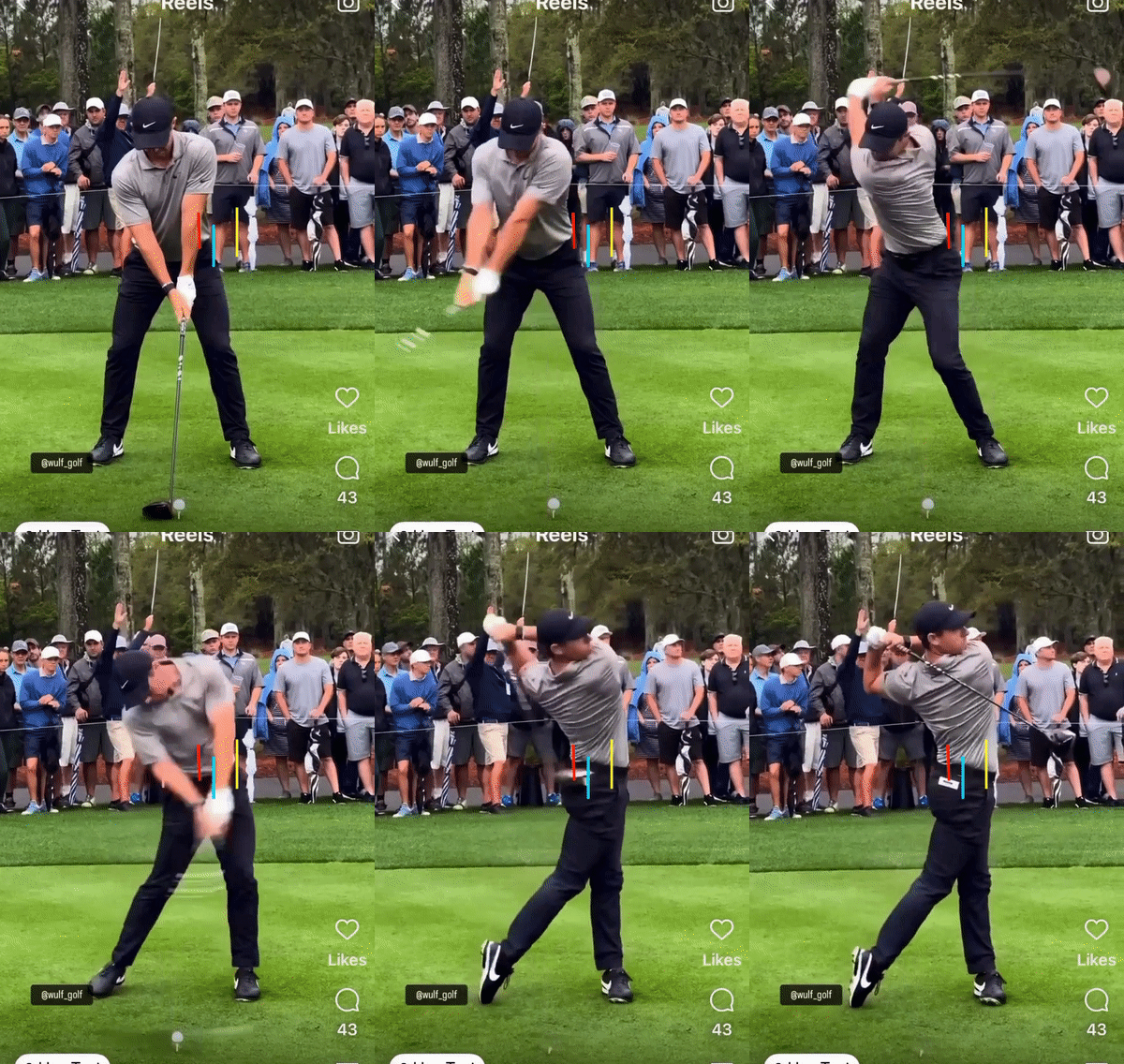
Rors is a great golfer, powerful swinger and multiple major champion but his driving stats are horrific because he’s shifting all over the place in his swing – at least he was the last time I looked at his swing.
Worked for Hogan, but he had to hit balls all day, every day because the shift was not an advantage, rather it was a negative swing component.
Just the pivot action, please…
I don’t want Mike Dunaway’s golf swing, either – the head shift on the back pivot is a no-no in athletic motion, not for reason of being unsound, more of being un-optimal – but when you look at leverage, power production and speed generation, I can point to his down swing from the top to the swing bottom and through it:

… it doesn’t get any better than that.
Do I want his centered bias and shifting head on the back pivot? No, I don’t – but give me the “Leaning A” setup and the late Hogan pivot action (basically the same as Dunaway’s but with a different swing model) and Mike Dunaway’s top position from which to swing down…
That’s the swing I want, because that is my optimal golf swing until something better comes along, and it hasn’t yet after all of these years.
You’d have to find a better setup than what I feel is optimal, a better pivot action than what I feel is optimal and/or a better top position and down swing action than what I feel is optimal for that.
I have worked out the first two components of the optimal golf swing and am now the third part – so how do I know or why do I believe that it’s the way Mike Dunaway did it?
It’s because for years now, probably going back to 2017 or so, whenever I have practiced really hard swings with my SwingRite, my position at the swing bottom has been with both feet perfectly flat on the ground, only after which time (post impact) has my trailing heel come up and I have finished with a step-around of the trailing foot:
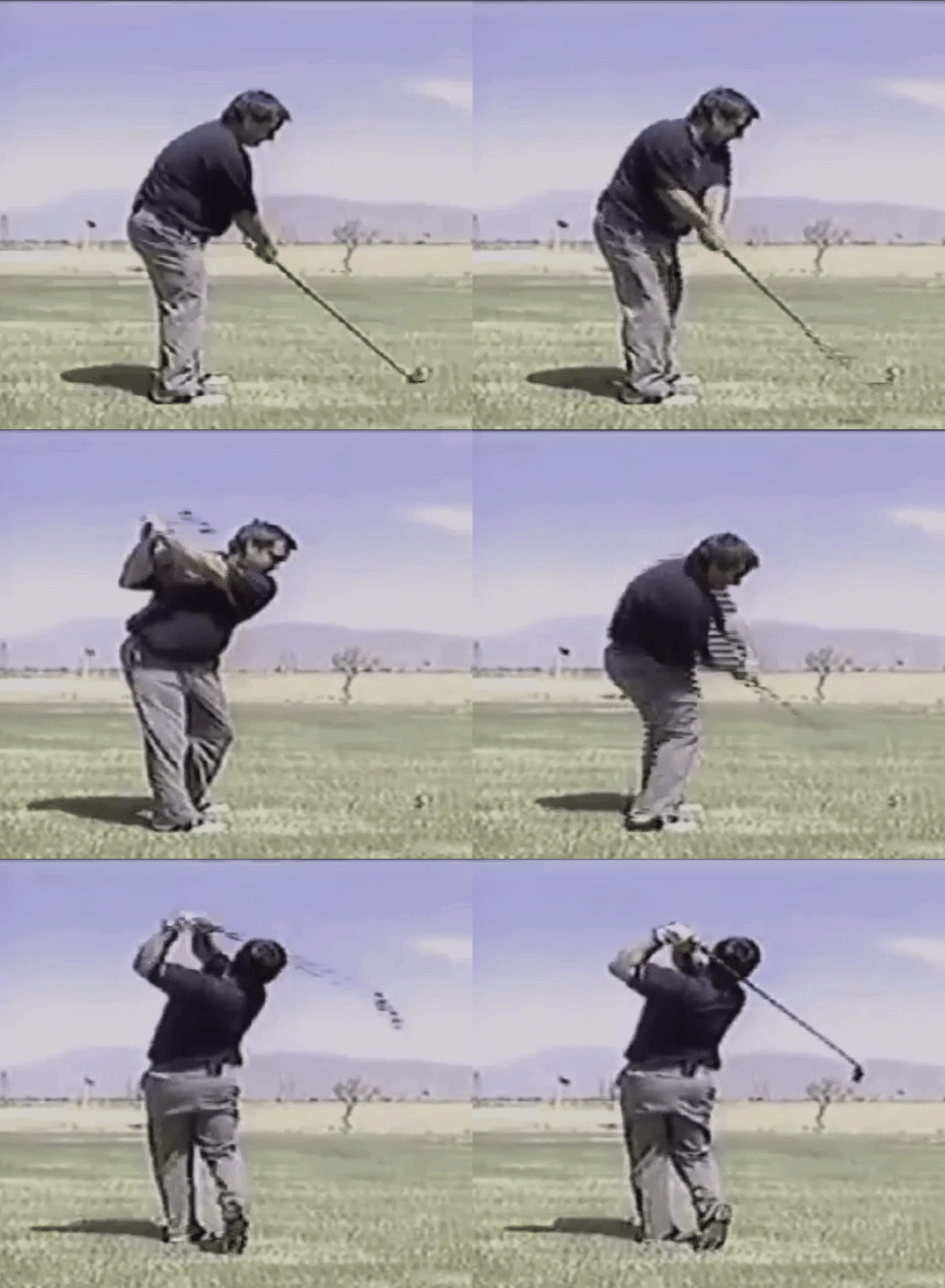
I want that action, but with a ball to get in the way instead of with a training aid.
You see, even Dunaway when he was making videos with Mike Austin stated that you want a “Z” position in the trailing leg at impact:
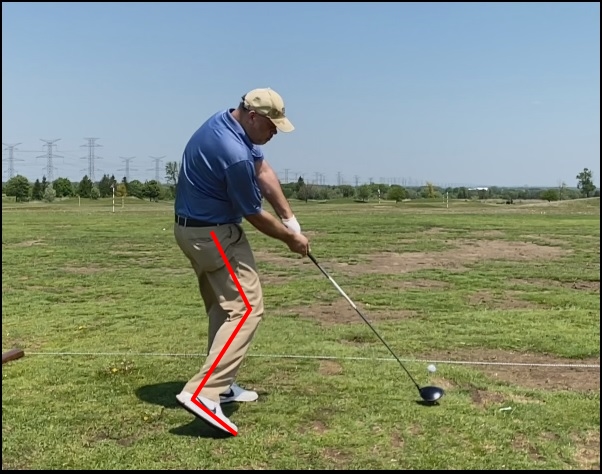
… but you can clearly see that if Dunaway is captured at impact on his most powerful swing model:

… his trailing foot is flat at impact and only begins to heel raise at that point.
So, I’m pretty confident on the 3rd component of the optimal swing, and I’m working on getting there myself in my own swing model.

