
 I am solving some of my previous “mysteries” regarding the golf swing and pivoting now that I’ve been able to identify, isolate and deliberately perform the “Shift & Post” action which I had previously performed without knowing it.
Going all the way back to 2007, nearly 20 years ago – I have a whole VHS videotape cassette in my bedroom closet, and an old VCR that is missing a remote control, which contains golf swings of mine from 2006 going through 2008.
I have to figure out if this VCR will work with a modern digital TV (doubtful), and I will likely have to get some sort of converter to hook up to the computer as I used to do with analog VCR and video camera footage, because there are some interesting things in that cassette, to be sure.
For example, I did manage to get a few swings from that video cassette back around 2010, the following of which from autumn 2007 is one:
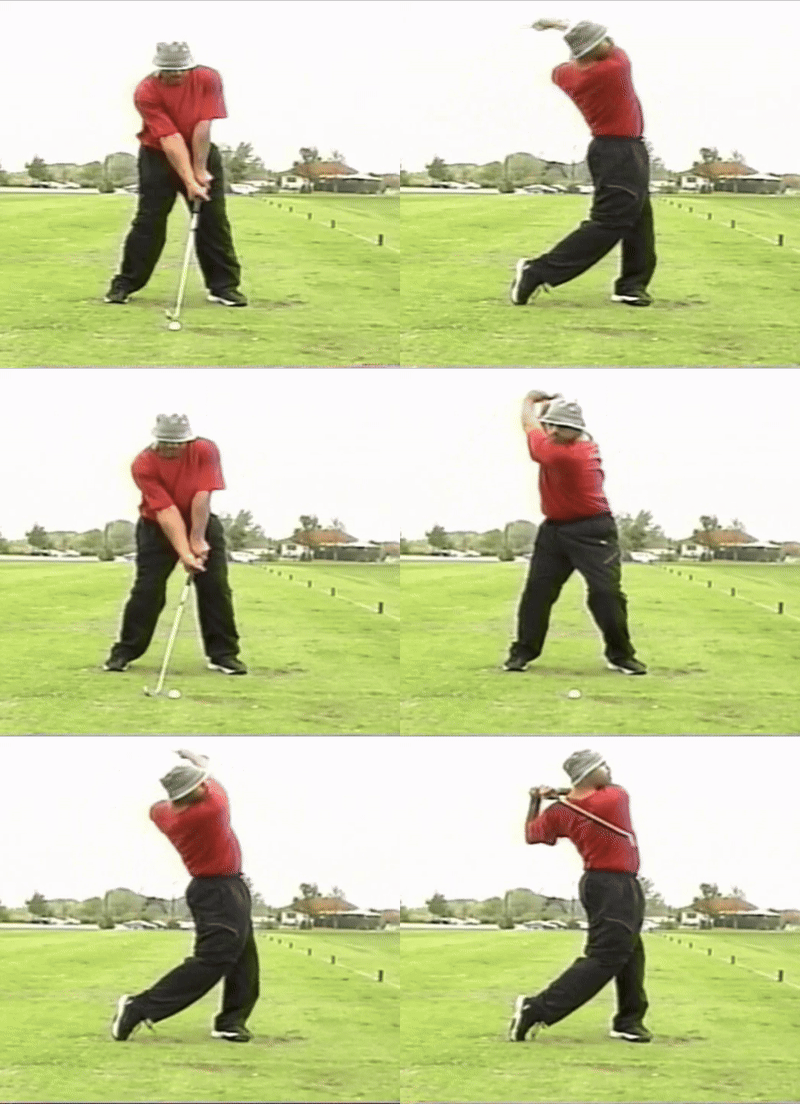
If you watch the pivot action, it is virtually identical to what we are calling the “Shift & Post” action, with a grounded leading heel but a full hip and shoulder turn.
What may throw the viewer off is the extra-wide stance for this 5 iron swing, but the action is unmistakable once you know what to look for.
I was 37 here, in my second year of swing analysis and experimentation, and the wide stance was because I had been studying Moe Norman, but I was absolutely pelting that ball with every club, dead straight, but when I make one adjustment, the reason becomes obvious:
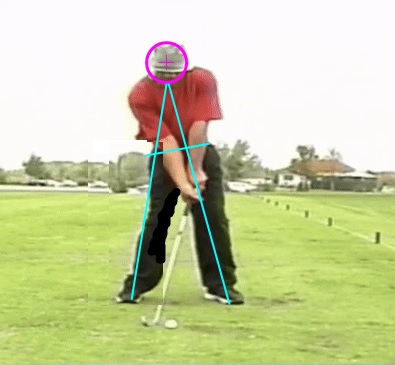
By crudely narrowing the stance to one I would use for a 5 iron, swing look at what I had here – the “Leaning A” setup with the head exactly where it should be, and that baseball grip worked exactly the way I’ve explained the Nicklaus “Classic-weak” grip works when you hold the club in your fingers.
What I wonder about is the head stability even making that big shoulder turn back pivot and then hammering the ball – there’s a little drop on the transition to the down swing to impact, but nearly perfectly lateral stability.
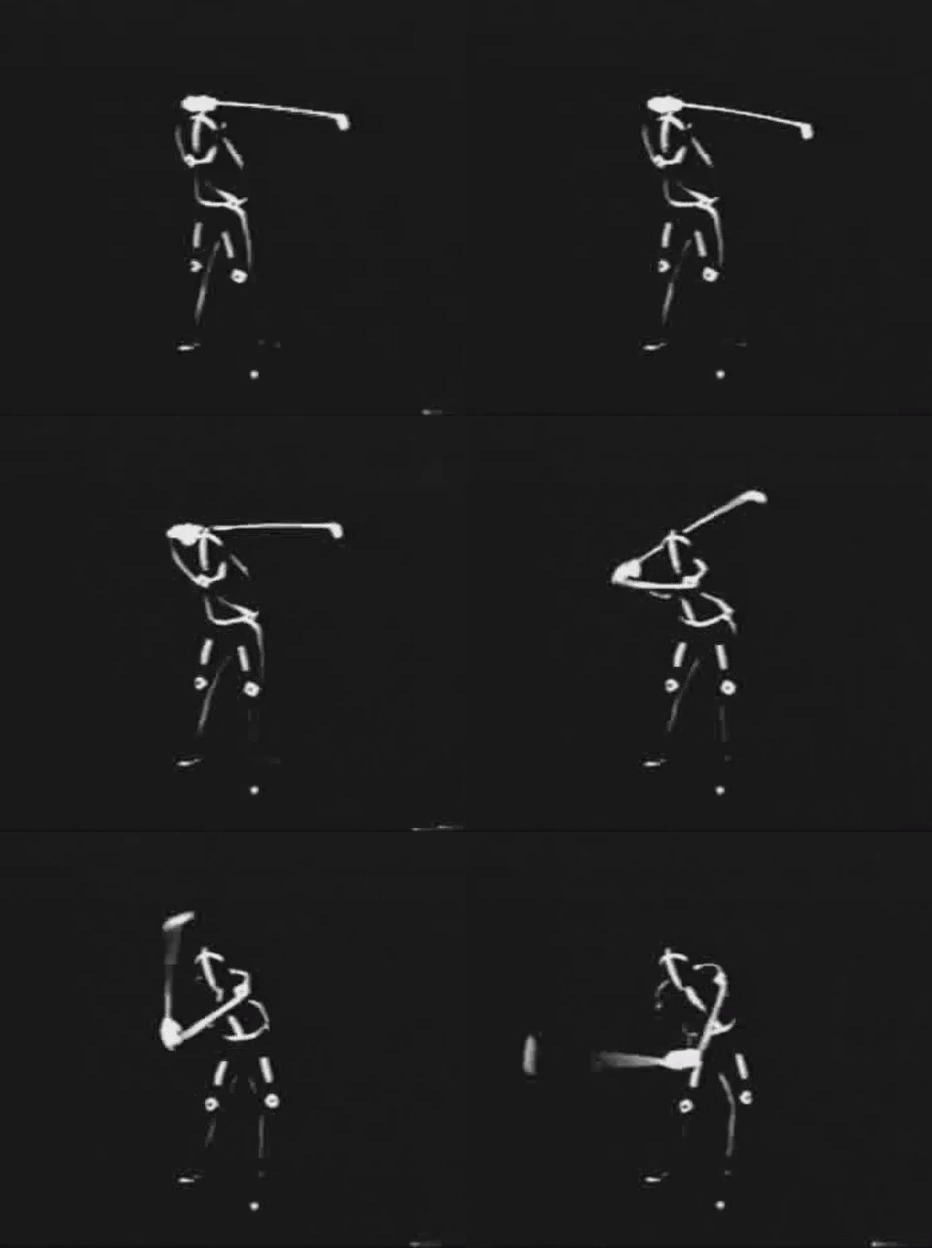
I haven’t seen a drop from the top so close to the “Dunaway Drop” in any swing of mine other than this particular way I was swinging in 2007.

This particular model, I went away from of course, but it still strikes me how close I got to the actual “Shift & Post” pivot – without the extra-wide stance, I likely would have come through impact with a flat trailing foot that then came up for a step-around finish.
It’s definitely not your standard classic rotary swing action, as you can see that at impact, there’s no hint of a turn to the target at impact – it’s the momentum of the club and arms that turns me post-impact.
I’ve been mystified for nearly two decades, once I figured out that the Modern Golf Swing was fatally flawed and the one should swing in the Classic Golf Swing style, how I was able to get that full a shoulder turn with a planted leading heel, but that mystery is now solved – I was performing a rudimentary “Shift & Post” pivot action and not twisting my lower back to get there.
I expect to see this same drop in my swing model when I get back into swing-shape, because that adjusted setup I just created, aside from the grip, is exactly how I envision setting up over a 5 iron now.
Just throw in the “Classic-weak” grip that I describe in “The Basics Of The MCS Golf Swing” and perhaps move the ball up a bit for less shaft lean, and I was that close nearly 20 years ago just looking at Moe Norman and using my own athletic instincts to swing a club.

