
 I looked at a swing clip of mine from ’07, that you’ve all seen before, and that something caught my eye, leading me to conclude…
… that in my first year of actual swing research (I started the mission in ’05 but didn’t have a chance to really hit balls regularly on the range until ’07 due to work and family constraints), I had what the Modern Golf Swing is killing itself to replicate.
You’ll remember that I was confused for years about what Tiger Woods and the rest of the Modern Golf Swing crew were doing (or trying to do) until I caught a view of Ben Hogan’s iron swing from a front diagonal view.
It was then, just this past June, that I instantly saw behind the curtain and said to myself, “Blimey – this is what they’ve been trying to do!”
To recap:
Now, when you watch this gif. that you’ve seen before, you can disregard the wide stance and grip (I was in my Moe Norman phase, so extra-wide stance and two-handed baseball grip), because I could easily have performed the same swing with a narrower stance and traditional grip:
5 Iron 220+ Yards
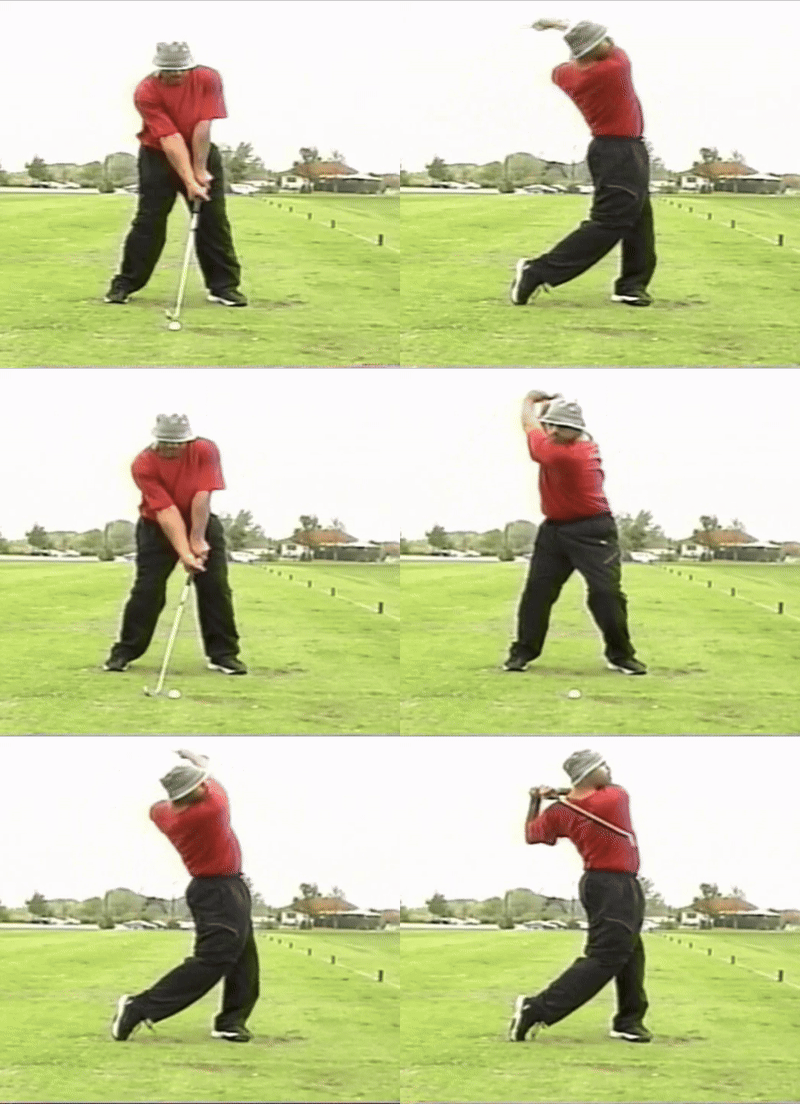
I don’t know if you can see it, but my facial expression coming to the finish says it all – I was saying, “What on earth?!?” in my mind, because I was absolutely pulverizing the ball with swing after swing. With iron after iron after driver after driver.
Now, look at what Sean Foley was doing at the time he was Tiger Wood’s swing instructor:

Not only barely a 3/4 swing, because he couldn’t get any more turn out of this model without twisting his back into a pretzel, but the heave coming into impact and the off-balance finish nearly falling over at the finish… not exactly a paragon of athletic motion.
Now, watch the pure leverage and gravity drop from the top (with a lot more stored power than Foley’s model, I might add) to the impact:

You see the shifting of my weight into the leading foot, which levers down the leading arm, but with no harpooning action?
That meant I was just swinging down and through, with no Flying Foot, no hyperextension of the leading knee, no rolling onto the ankle… just pure leverage and power – at past 37 years of age.
Now here’s something that everyone is trying to do – the Ben Hogan “squat” action, what they called the “sitting from the top,” complete with the slight head drop with the left hip-bump, which is nothing more than the shifting of my left hip toward the target and over my leading foot as I shift my weight on the transition:
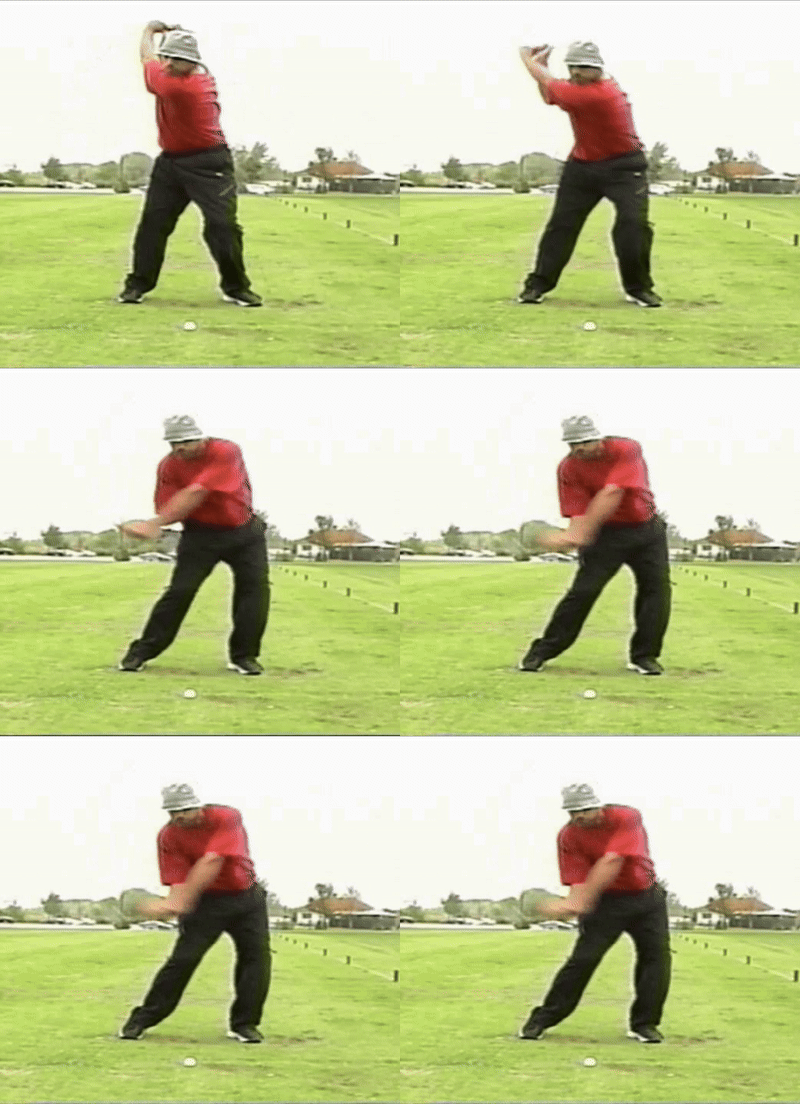
You’ll also see that, even though I had my leading heel nailed down through the entire back pivot, there’s a slight squaring of the leading foot as I begin down, and what made this swing so powerful was that I never disconnected my upper and lower halves.
I didn’t even know that I was doing any of this – it was pure athletic instinct while I just focused on the back pivot and then the shift of the weight to begin the down swing.
I knew, of course, not to twist my lower back, and this, friends, is the Holy Grail – I had built a setup and pivot that allowed me to do all of this even with a nailed-down heel, and if I had narrowed my stance a little and changed the grip to the traditional one, what would you be watching?
You’d be watching a swing model that the Modern Golf Swing industry would have given the bank to see disappear from the earth, because once I had this particular model figured out (a couple of weeks of tinkering on the range), there was nothing really to practice and work on. It was “plug and play.”
Here’s a slightly different version from a previous day as I tinkered – see if you can spot the subtle differences (also note the front of my hat completely soaked through with sweat):
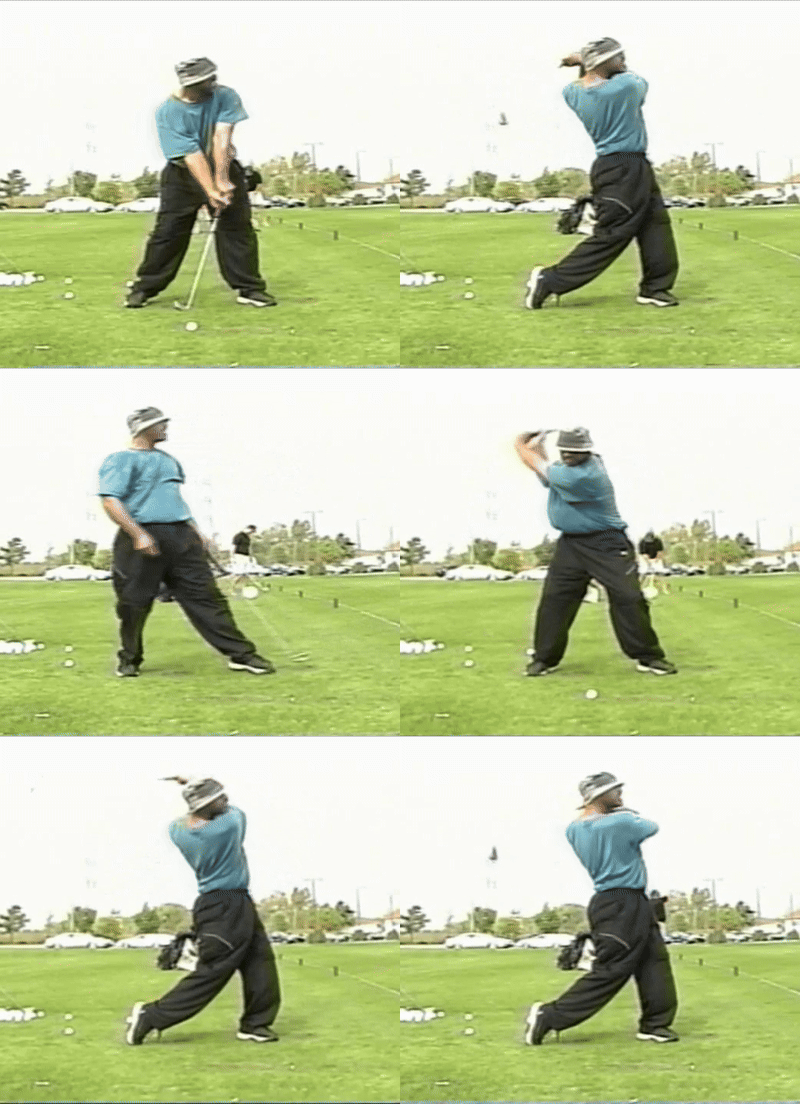
To continue, as with any mechanically-correct motion, there are no compensations or manipulations to have to maintain and constantly practice.
So, bye-bye endless expensive golf swing lessons.
Why did I change from this model or at least not refine it further?
Sadly, I was still a fledgling in the swing research journey, and I was watching Modern Golf Swing garbage on television daily, so I kept changing things up and this model became a footnote in my swing research history.
It took studying Ben Hogan’s pivot 7 years later for me to finally begin to figure out the optimal golf swing model.
But don’t expect me to tell anyone how I built this model and how one can swing this way, even with a narrower stance – without my standing and watching over someone’s shoulder as they tried this swing model, I wouldn’t dare to do so, because I won’t be responsible for anyone wrecking themselves trying and doing it the wrong way.
But rest assured, if I could swing this way for hours at a time at age 37 and not ever experience a moment of physical discomfort, the way I was doing it up above was completely “do-able,” and I still remember the sizzle of those balls as they left the club face.
That swing model, and this one:

… are two swings that I could watch all day long, because it is the combination of the athletic aspect and the absence of compensation or manipulation that make them so pleasing to my eye.
 WAX Golf