
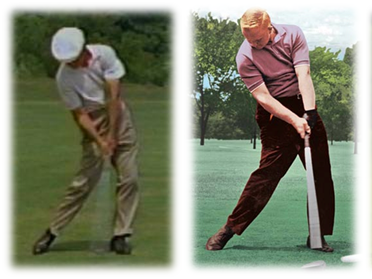
 One may have been wondering, why did I say that Jack Nicklaus was the closest to optimal when it comes to the golf swing, but I’m constantly talking about Ben Hogan?
That’s because of the nature of swinging – Nicklaus was far more powerful in his swing, but Hogan was much more accurate and consistent because of the pivot action in his swing.
I’ve said for years, copy Hogan’s pivot but not his actual swing because of all the anti-hook measures he built into it.
So I would say, copy Nicklaus’ optimal setup, but use Hogan’s pivot action when actually in motion.
I am even more adamant in that because, for the past few weeks, I’ve been working on my pivot action to make it closer to Hogan’s, with a lower heel lift than Nicklaus’ but still providing a full hip and shoulder turn.
By altering the pivot action slightly, I can duplicate the shoulder turn in my earliest iteration of Nicklaus/Hogan back in 2015.
To recap, here’s the setup that I would call optimal – it’s Nicklaus’ 1963 setup but with a narrower stance:
Nicklaus’ 1963 actual setup on the left with a narrower stance width on the right:

I’ve pointed out my too-strong grip in the 2015 swing, but with Jack’s weaker grip, I would struggle to find a better setup than below:
Jack’s Setup w/Adjusted Stance Width & My 2015 Setup With A Weaker Grip

So there above, we have the Jack Nicklaus part of the MCS Classic Golf Swing model that I see as optimal.
Then, we introduce Mr. Hogan for the pivot action, what I have called the “Perfect Pivot” action, just a beautiful rotary hip turn:
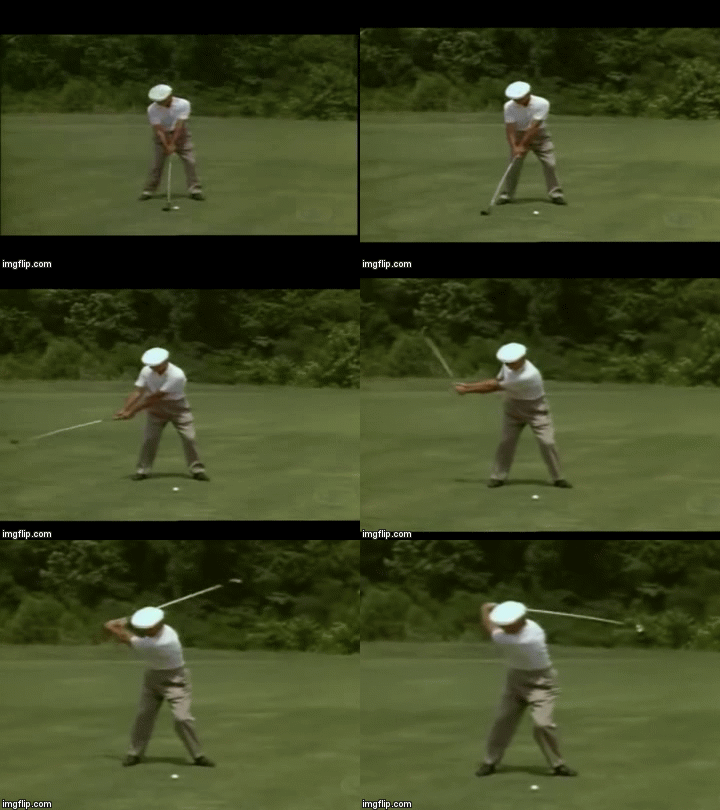
You see that Hogan’s hips turned beautifully with his leg and hip action – there was no shifting to his right the way Tiger Woods and Rory McIlroy have either done (TW) or are doing now (Rors).
That action, with the sliding release of the trailing foot on the down swing, gives one the perfectly balance pivot and maximum leverage coming back down:
… so if you think Ben Hogan couldn’t have played today’s Tour with his swing model, guess again.
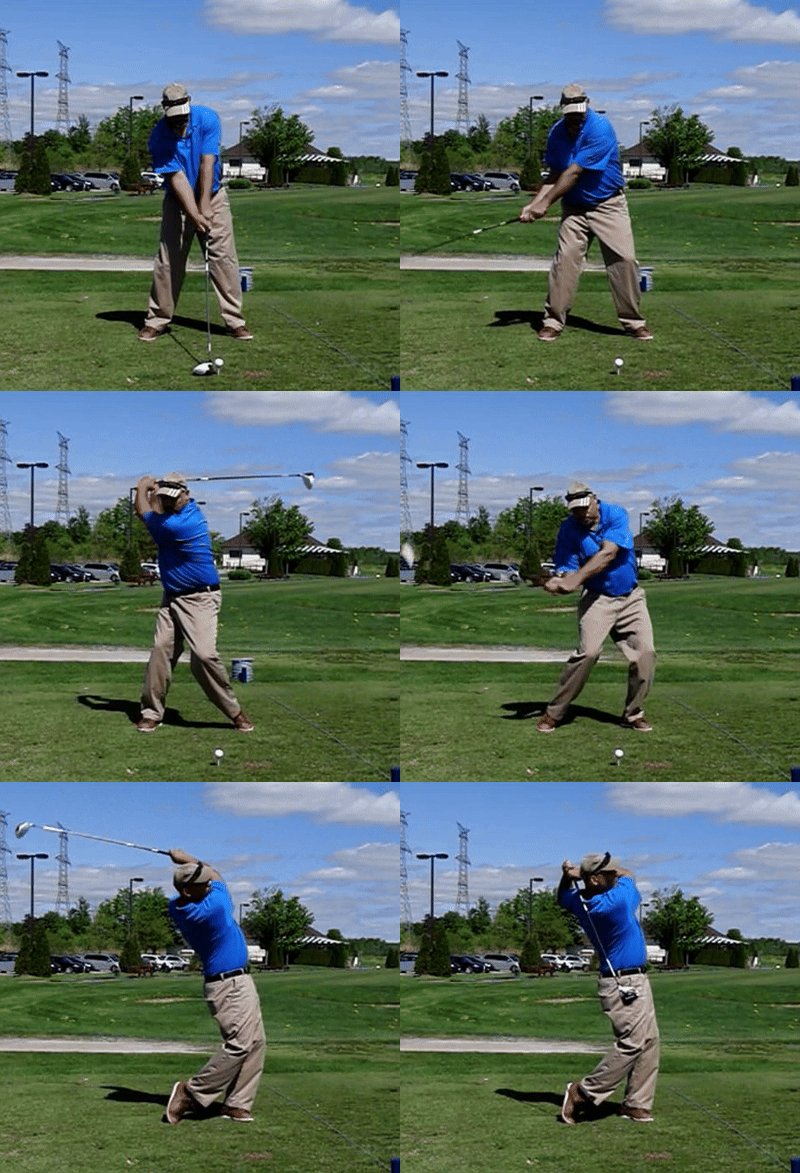
This is what a Hogan pivot action looks like in real time with Nicklaus’ setup:

I was 45 in the above gif. Does anyone doubt that a professional golfer any age from 20 to 50 with this swing action wouldn’t be able to compete on today’s Tour?
Compare that fluidity of the above pivot with Scottie Scheffler’s below, and how un-natural and awkward it looks at the top because of his restricted hip turn.
He has to stay more on his left side than he should be, and it all comes from that restricted-hip pivot due to the planted leading heel.
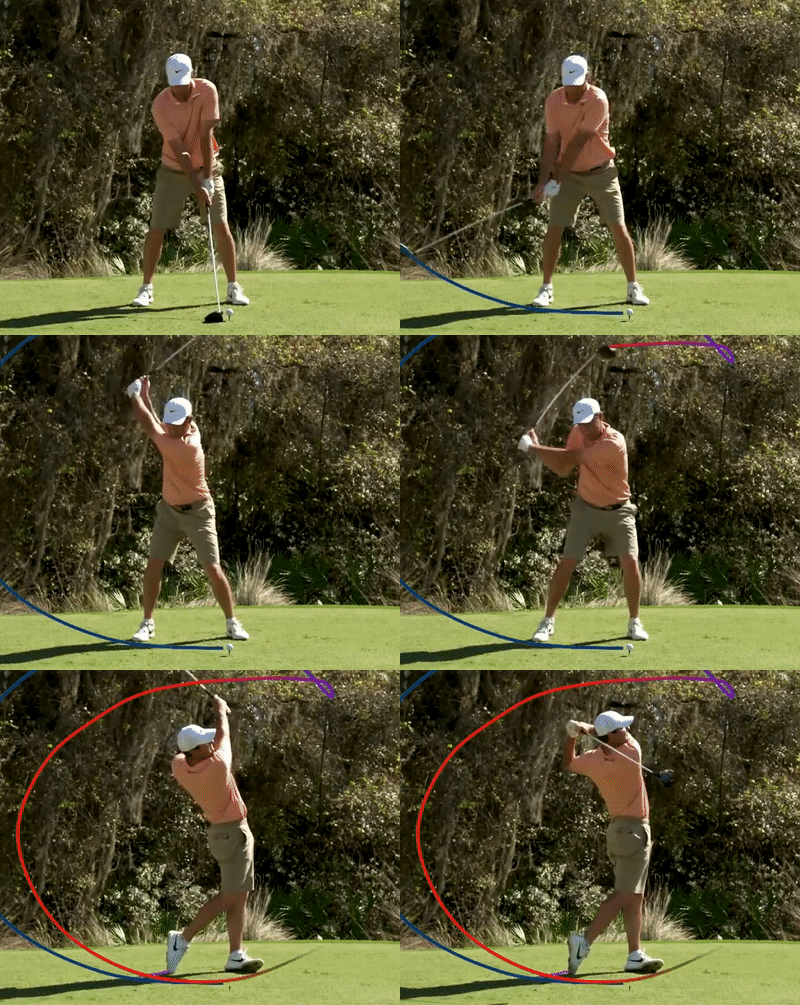
Again, we’re not arguing about whether he’s a far better golfer than I am (he is), I’m talking the swing mechanics and whether they’re sound or not.
Plus, if Scottie had a lifting leading heel on his pivot and didn’t have lean back to his left getting to the top, what do you think he’d look like?
He’d look like my model, as proven by a better pivot and sliding release from a teaching pro and tournament player (Jerry “BT” Crowell) using my model back in 2016:
How Similar Do They Look Except For The Back Pivot?
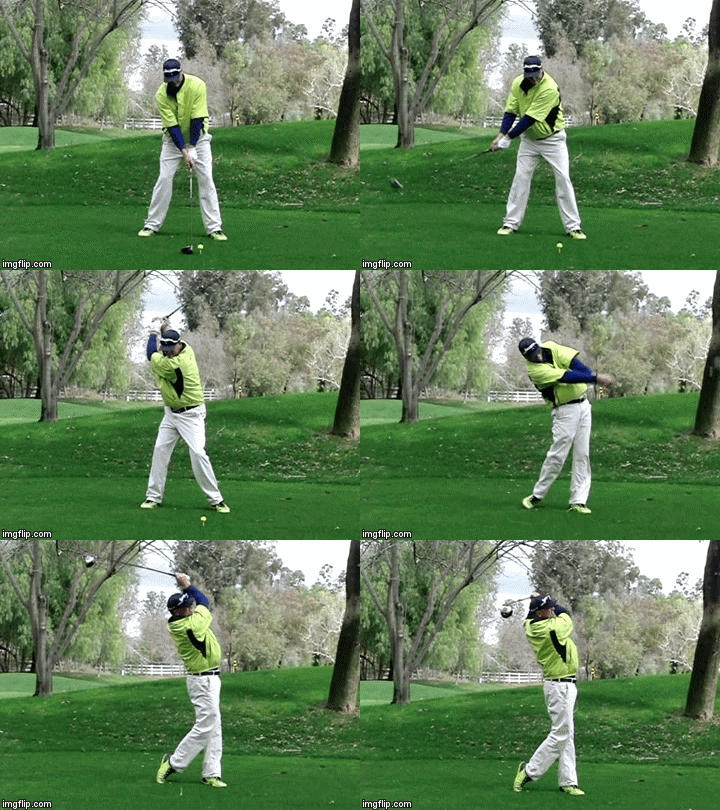
BT, by the way, was going on 51 when back in 2016 and had narrowly missed qualifying for the Farmers Insurance by two strokes in a qualifier – I saw his power in person, as I was carrying his bag.
A couple of better putts (he missed two near tap-ins) or better communication between us (he missed two fairways when we discussed a target off the tee and he thought I was pointing out the landing area when I was talking about the line to draw his ball from off the tee) and he’d have been in.
Also, Jerry’s ball speed when he set a personal record (at 50!) using this model (disregard the name as he was hitting balls after someone else had used the launch monitor):

… if he’d had a driver that gave him 2100-2200 rpm instead of the 3100 rpm that this one gave him, he’s carrying that ball past 300 yards.
So yes, I basically had the optimal setup and pivot action figured out ten years ago, but you don’t know which model is the optimal one until you’ve tried every variation under the sun, which is what I have been doing the last decade.
I determined this past winter that the 2015-2016 model I had built was the best, and that’s what I had presented in my 2017 “E = MCS” golf swing video.
This next vide that I am working on, will be the culmination of all of the study I’ve put into the golf swing.
More to come!
 WAX Golf
Tried this with a 3 wood and a 2-iron today and was just striping the ball.Effortless.Looking forward to your long awaited video.
The setup is most of the swing, which is why people struggle- they aren’t using a proper setup from to swing and then wonder why they aren’t improving.
The Iron Byron has to be set up properly in order to make optimal contact at impact. We are no different.
That is one thing about iron byron that needs pointing out.When you hear people talk about the golf testing robots they only talk about their results.Not why they get their results.
Exactly – if you said, to anyone, “It doesn’t matter how you set up the Iron Byron, it’ll be perfect impact every time,” they’d look at you as though you were mad.
The machine has to be positioned square to the target line. You have to have the club set in the arm so that the face is square to the flight line (or offset if you’re trying to draw or fade the shots). You have to have the ball set in the proper position to the swing arc – unless you think putting the ball where you would be put it for a wedge shot to test a Driver is fine.
There is a reason we use machines to test balls and clubs, now that Mike Dunaway is no longer with us – the machine will repeat.
The closest you can get to the repetition approaching the machine is to mimic the setup process. And to have a mechanically-sound, therefore repeatable swing action, to avoid bad misses and increased injury risk.
But what do I know? I just watch people swing and build swing models.