
 It’s certain that this will be WAX Golf’s last post of 2023 and I thought I’d return to one of my pet peeves.
I don’t think I’ll ever be able to convince the world at large that the Flying Foot Syndrome is a swing flaw and not an aid – it goes back so far that I even found evidence of it going back to the Bing Crosby event days.
Here is Jimmy Thomson, long-hitting legend who actually drove a ball 400 yards back in the 1940’s, displaying that Flying Foot Syndrome:

It’s very slight, but there nonetheless.
At this point, I’d love anyone reading this to ask themselves one simple question – when throwing or swinging an object from what we’d call our trailing side (say you stand and swing or throw something from your right to the left), where would you have your weight at the moment of release, and which foot, if any, would come up?
It’s a simple question with a simple answer that we all instinctively know – you would have your weight on the leading foot since that is the direction of the swing or throw, and if you’ve played any sport at all that involved a motion where the crucial aspect of that motion places the weight into your leading leg, you would also know that your trailing foot would be the one to release from the ground.
Since we all know that, then someone please explain to me how the world of golf attempts to operate outside of the rules of athletic motion?
Even Tiger Woods at his highest level of “godliness,” according to his fans, had it going on – this was from his Nike ad circa 2006, sped up:
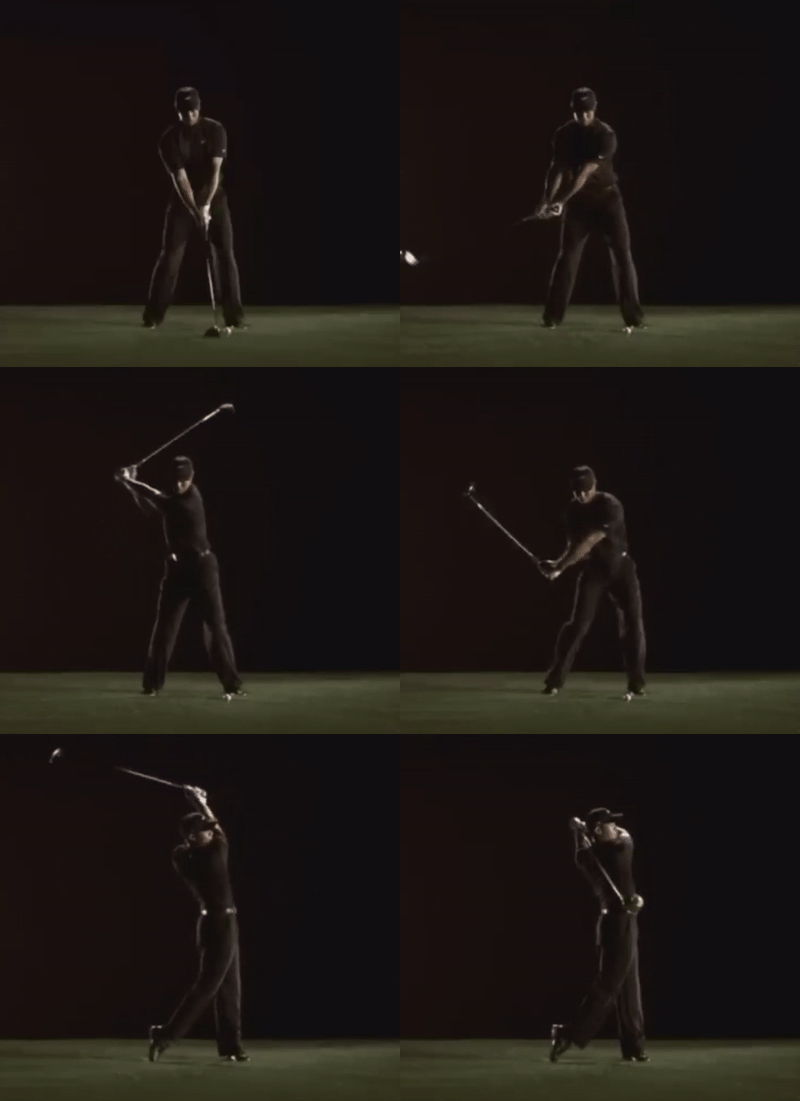
Why, when swinging a club, does one have one’s leading foot being the one to leave the ground, while the trailing foot remains anchored?
I know already the answer I’m going to get, and it’s bogus:
For “vertical lift,” and nope. As I demonstrated with driving stats, some of the worst Flying Footers have very little positive angle of attack, so right away this is wrong:

Plus, the club head will begin to rise after the swing bottom, so if one is having to try to “lift” the club through impact, then one is clueless as to the nature of a club arc, which is shocking if one is a pro golfer or analyst.
No, the answer for why swingers have Flying Foot Syndrome is rooted in the obsession with keeping the right or trailing foot anchored to the same spot on the ground throughout the entire swing all the way to the finish:
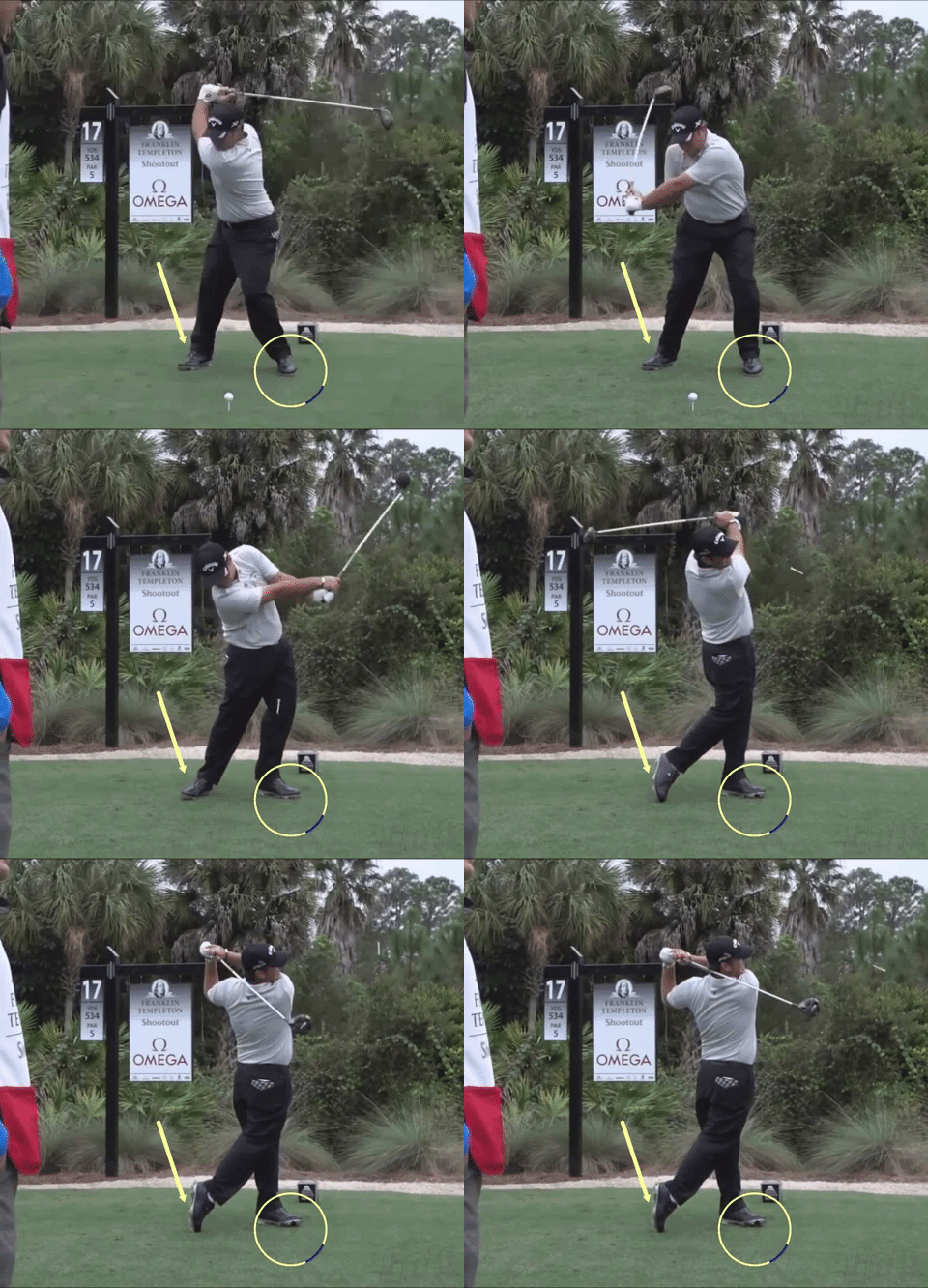
The nature of the golf swing is that the hips will be turned more to the target at impact than they were at address, and the turning of the hips means that one must release the trailing foot, as one does when walking.
Add to this the problem of a swinger not having the proper flare angle to the leading foot, and you get the combination above of Patrick Reed.
Let me suggest this gently – there is no value whatsoever in having one’s trailing foot anchored throughout the entire swing other than from instruction or aesthetics – you’ve been taught or think that somehow this is a better-looking way to swing or is a more stable method.
Let me suggest again, not so gently, that it makes no fracking sense (I mean it’s insane) to talk about “stability” when the foot that is supposed to be bearing the lion’s share of the body weight at impact is flying around during the most important part of the swing – at impact!!
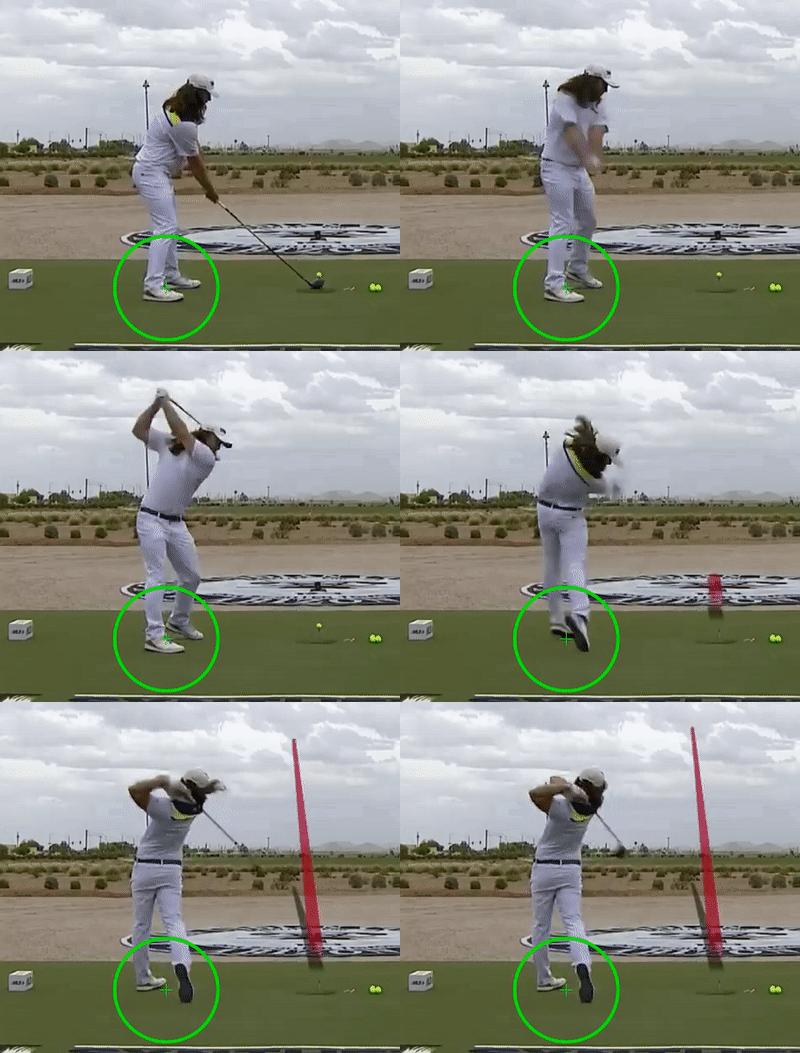
You can see in Kyle Berkshire’s swing that there is a violent glitch at impact where the trailing foot wants to release but he’s not doing so, and instead has to absolutely yank his left side and leg around to avoid snapping himself in half.
I don’t know about you all, but that seems a lot of extra stuff to have to worry about and time correctly rather than simply letting the weight shift properly back to the leading foot and releasing the trailing as it becomes necessary.
You don’t even need my word for it – just try to find a motion in any other sport where there is supposed to be a shifting of weight to the leading foot but you instead see the leading foot flying around at the crucial moment of the motion, while the trailing foot remains rooted.
Spoiler: You won’t.
Only in perhaps cricket and baseball might you see the leading foot spinning or turning over onto its side, but that is because the batter or batsman is reacting and must rotate quickly to make a swing at a moving ball, but it certainly doesn’t leave the ground (because the body weight is not remaining on the trailing foot), and even this is a flawed motion.
I know because I played baseball in my youth and never had a twisting or turning leading foot when swinging a bat – I would plant my leading foot with the correct flare angle to it to facilitate a swing to either side, as I demonstrated ten years ago what my baseball swing would look MCS-style:
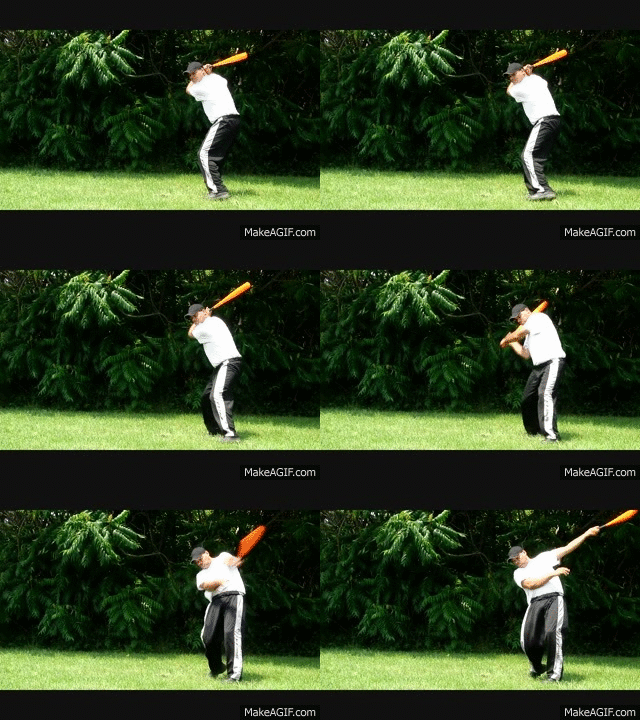
Some batters don’t step into a swing (most home-run kings do), so their leading foot will twist because they are spinning in place, or they might even step and then twist their bodies in a manner that makes spinning on the heel or turning onto the side of the foot necessary to avoid twisting injury.
And I used to grit my teeth watching this on the television when I still watched baseball.
Having incurred injuries playing various sports (fractured wrist, fractured sternum, cracked ribs, too many sprained wrists and ankles to count), I became very focused on injury risk reduction in playing sports even as young as my teen years, and you begin that battle by training proper technique.
And that, my friends, is the last posting of 2023 and I feel much better having gotten in one last whine for the year.
Wishing you all the best if you have already celebrated your New Year or are getting ready to – I’ve lots to get into the oven and hope to see you all safe and sound on the other side of our midnights!
DJ Watts
 WAX Golf
Last whine of the year was a good one. Happy New Year.
Cheers, Rick. Happy New Year! 🥳
Happy New Year to you and yours!
Happy New Year Geoff! 🥳