
 Greg Norman is considered to have been the greatest driver ever using a persimmon club and his slide from dominance actually came as a consequence of the introduction of larger, metal-headed clubs which allowed lesser drivers to equal him in accuracy and distance because they were more forgiving.
Just as Lord Byron Nelson replied more or less when asked how much modern equipment would have helped him, “Not at all – I struck the ball with the sweet spot, so more forgiving clubs wouldn’t have improved my game,” this would apply in part to Norman as well.
Nelson, you may not know, was the innovator behind the curved driver face (they were at one time completely flat), creating the “bulge and roll” face shape in his workshop with a wood grinder, that you see today.
You’ll also notice something about Nelson’s swing that you see to a greater degree in Norman’s swing.
Here’s Lord Byron’s driver action:

You see it?
If you missed it, watch his trailing foot through impact.
Now, take a look at a Greg Norman driver swing:
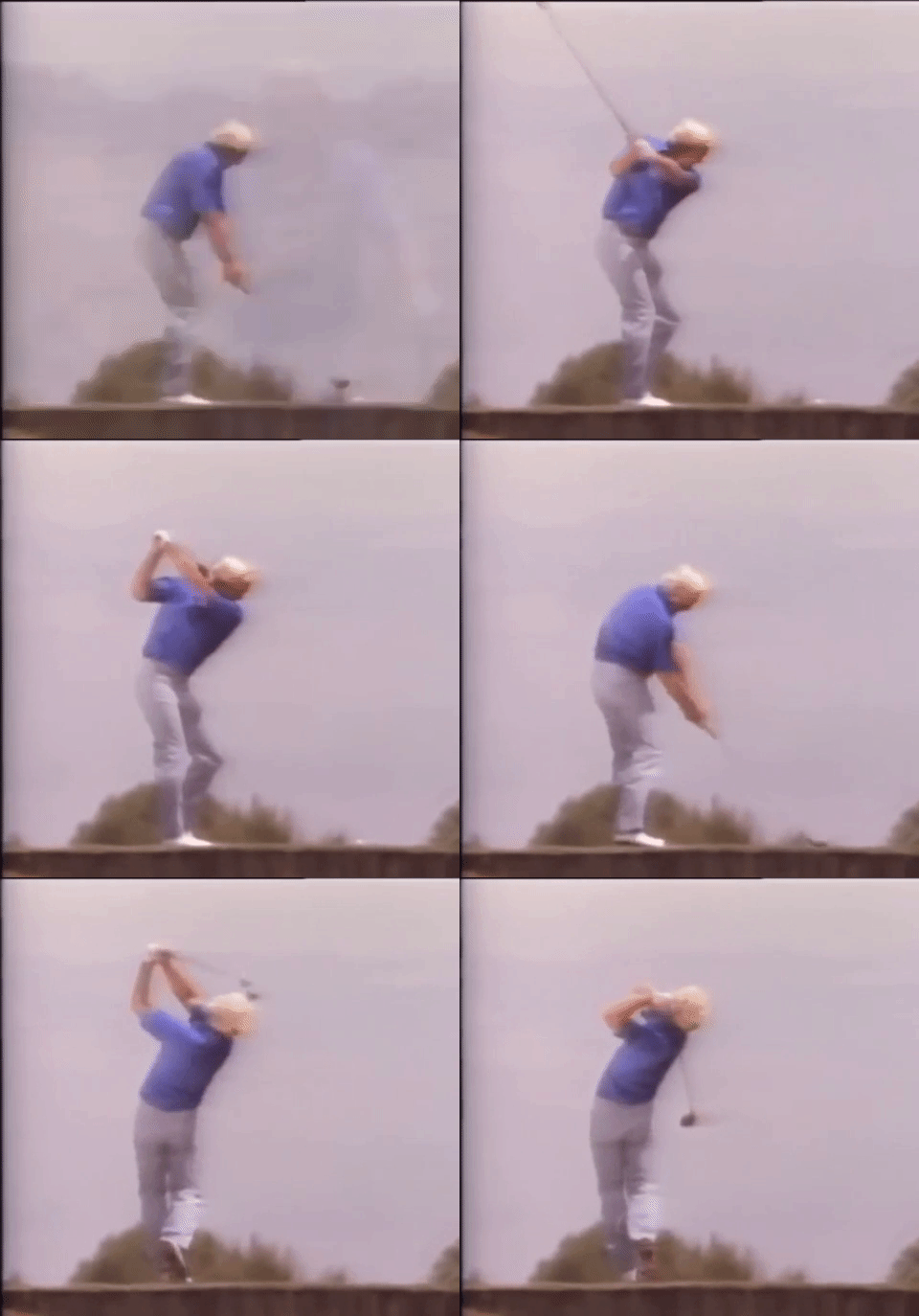
I recognize Norman’s foot action in this particular swing gif. – and not just the slide, but the manner in which his trailing foot slides.
You’ll recall my decision to get more athletic-minded in my swing research and I’ll tell you, this swing above of Norman’s is the epitome of an athletic golf swing motion.
I have been experimenting with the four ways of swinging a golf club that make athletic and mechanical sense and they are:
- the traditional Classic Golf Swing based upon a study of the best in the game,
- a Shift-And-Post Swing similar to Mike Dunaway’s,
- a Shift-And-Post Swing action similar to Mike Austin’s and
- the Optimal Classic Golf Swing modeled upon Jack Nicklaus’ golf swing
If pressed right now to say which swing I would use today, I would go with the first when playing golf (because that model is finished and has been for a while), would likely switch to the fourth model once I perfected the action, and might only talk about the middle two because they exist and can play if set up and performed properly.
I actually crossed my wires a while back trying to find a way to swing in the Classical style with a trailing foot that didn’t slide-release or delay the lifting heel until impact with the subsequent step-around until I figured out that the best possible way to swing Classically would involve a trailing foot slide-release exactly like the Shark’s above.
Now, Norman’s swing wasn’t perfect of course, as evidenced by the twisting leading foot action through impact even with the slide-release:
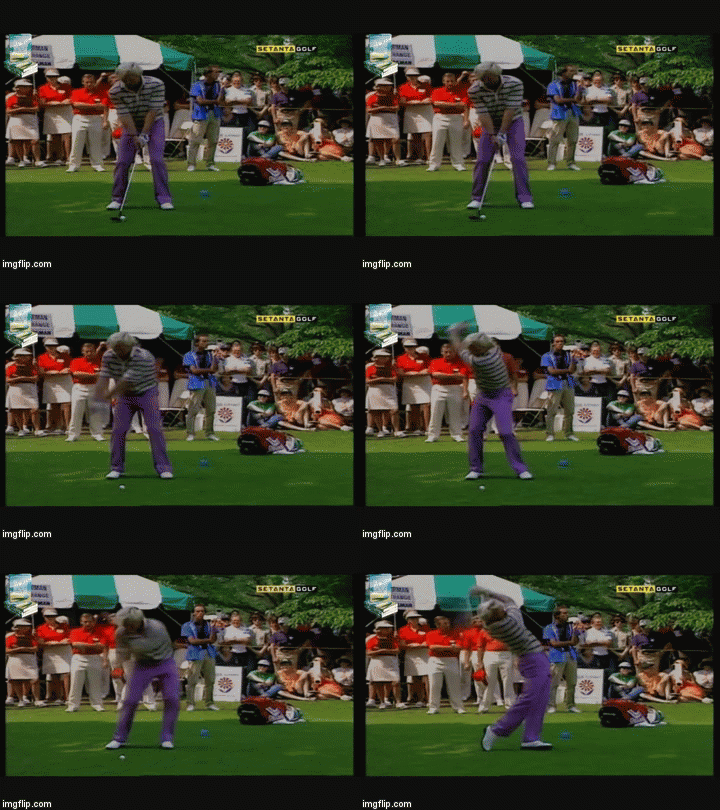
… but could be nothing more than either or both of a ball position or grip flaw – too far back from the leading foot and the swinger is forced to spin out to get the club through impact, and the same would go for a too-strong grip, only this time to avoid closing the face at impact.
In fact, looking more closely at that swing, Norman’s slight shift to his right on the back pivot combined with the Reverse-C finish position leads me to conclude it’s a ball position flaw, but that’s neither here nor there, really.
The trailing foot slide action is not a flaw, rather the sign of a very athletic swing action that doesn’t try to keep one’s body weight from fully transferring to the leading foot.
It’s really not a coincidence either that the man after whom the Iron Byron was named, and who was claimed to have struck at least two flag sticks per round when playing casual golf (by Tom Watson)… also had a slide-release.
Just saying… when you get into kinesiology, even as a layman with a lifetime of athletic experience, this is optimal footwork.
It is also only in the first of the four aforementioned swing models that you should find the sliding-foot release, because as I work on the other three, I find there is no need for the trailing foot to release until post-impact at which time a step-around finish is what should occur.
The work continues, with the first model complete and video-ready, the other three essentially completed but requiring data gathering and analysis.
More to come!
 WAX Golf