
 As I’ve been fond of saying, the target at which you’re swinging is not the actual target of your swing action.
The target of the swing action is the swing bottom, whether you’re swinging a driver or a lob wedge.
This whole business of pretending to throw the club at the target is so bogus as to defy mockery – you’re swinging to strike a ball at or near the swing bottom, so if you’re going to “throw the club” at a target, it should be at the ground in front of you, because that’s where the ball is:

I didn’t have a lawn dart in the above gif., so I simply used a broken club shaft with the grip still attached to the end of it.
You’ll notice that I’m releasing the club shaft right at the the swing bottom, which is why I can generate the speed that I do without jumping out of my shoes to do so.
When you look at the release action in a real swing, you will again see all of the focus is on swinging “down,” not “at the target, even with an iron:
DJ 7 Iron
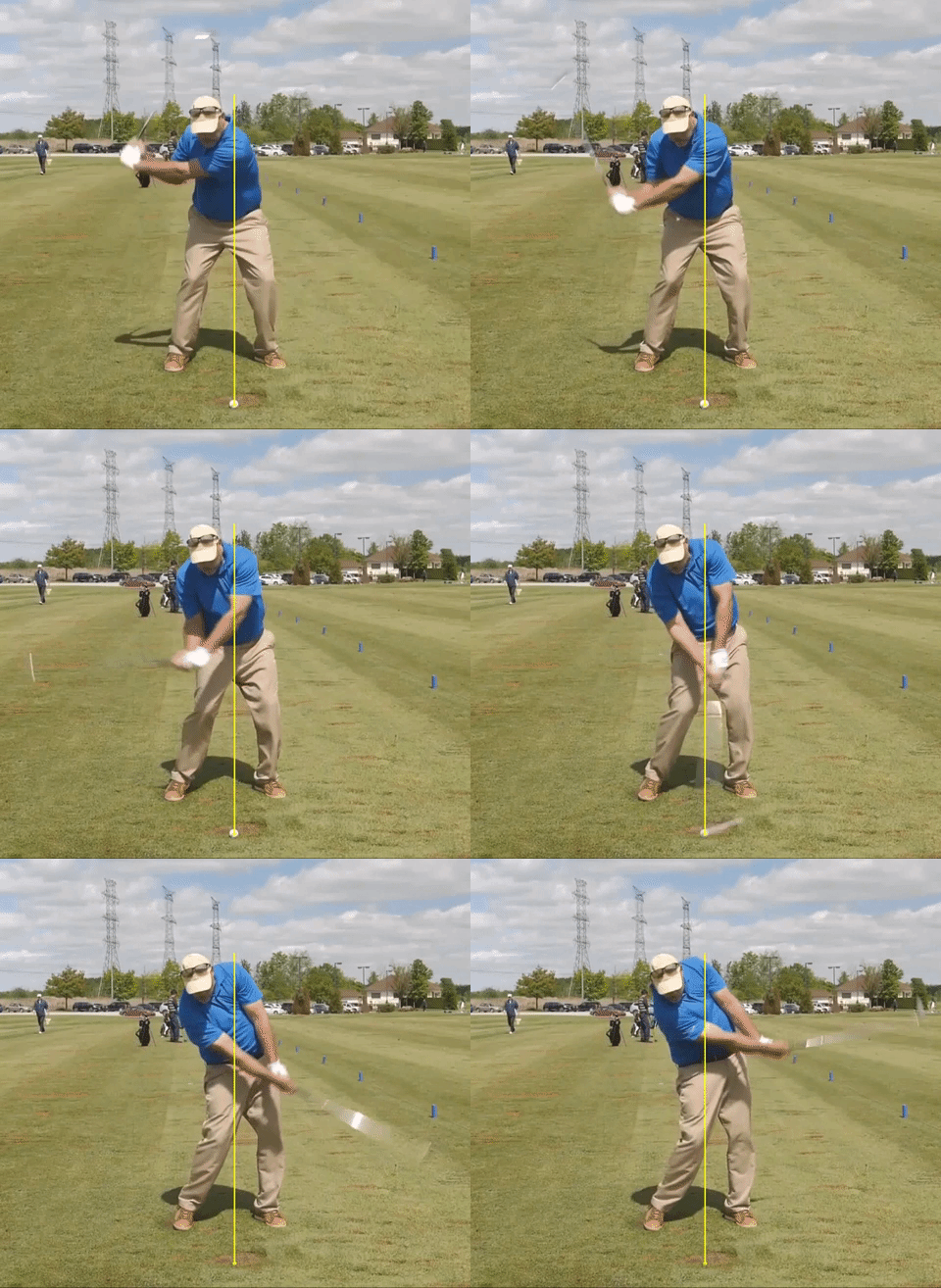
Once the club reaches the swing bottom around the leading foot instep, all of the swing effort is complete and the rest is momentum – if you’re swinging the club “at the target,” then you’re not accelerating and reaching peak speed where you need it, which is at the swing bottom.
Whether iron or driver, the swing bottom is your target, and the ball will just get in the way:
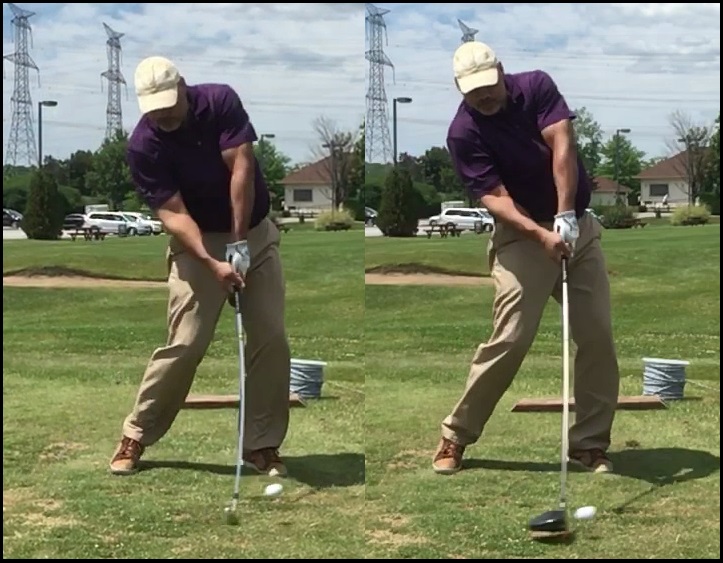
So, to practice and drill this action and to stop swinging “at the target,” focus on keeping the head stable on the down swing as mentioned in yesterday’s posting and keeping that trailing shoulder behind you until impact.
As I showed when hitting 160+ mph ball speed with a Momentus Heavy Driver, just imagine you’re throwing the club into the ground at the swing bottom, only you don’t actually let go of the club, and you’ll get this type of action – effortless leveraged speed and power:
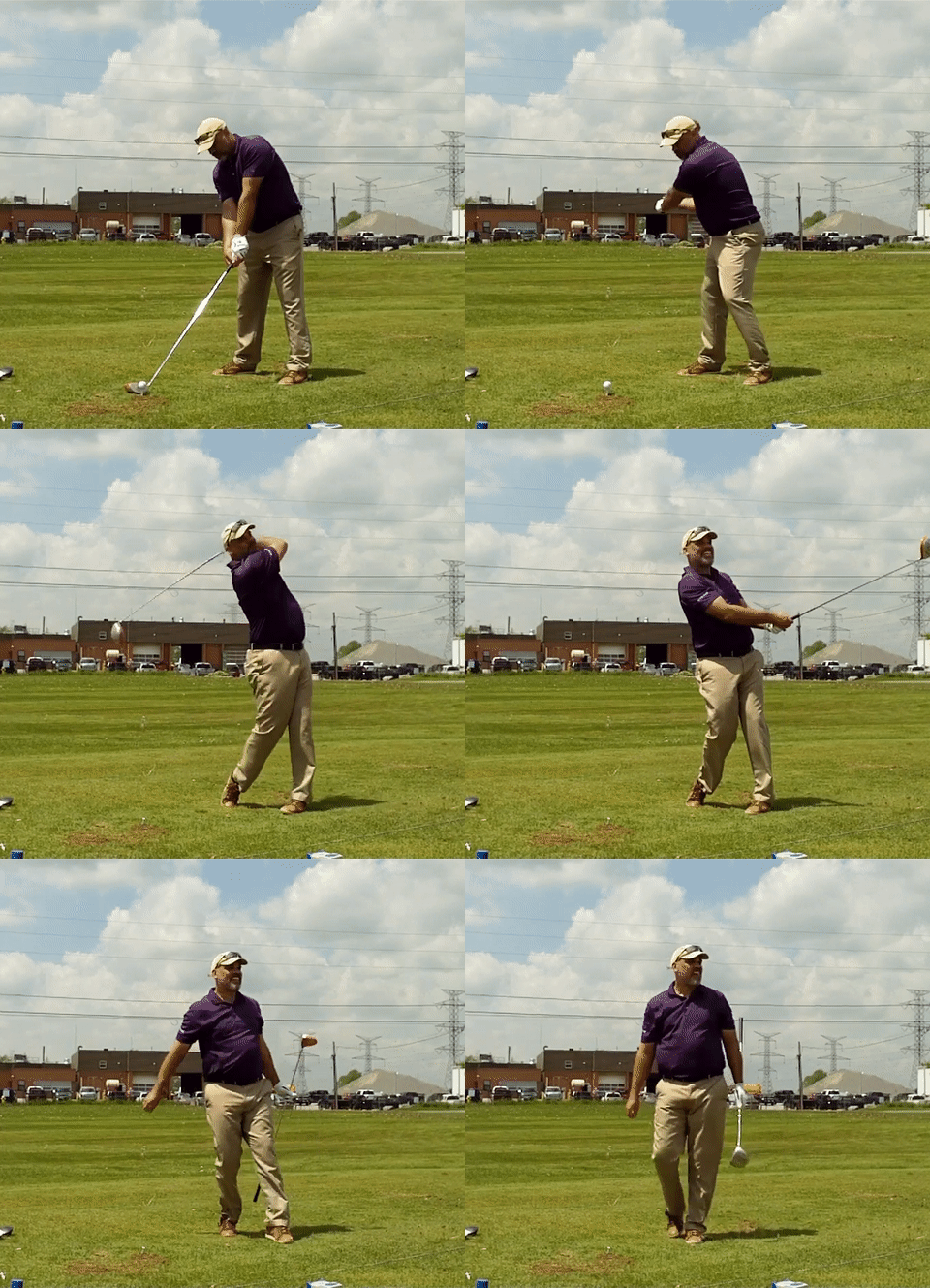
You can virtually see my swing shut off at the bottom, and it’s just the momentum of the club and my arms that turn me to the target.
And, as I’ve demonstrated by showing the Heavy Driver alongside my regular weighted driver (the video speeds were adjusted to sync up), it’s the exact same swing action, heavy club or regular:

I would wager you that not many modern swinging pros could do that without seriously injuring themselves, but I could stand and swing that Heavy Driver all day and the worst thing that will happen is I’ll eventually get tired.
 WAX Golf
“Once the club reaches the swing bottom around the leading foot instep, all of the swing effort is complete”. I love this statement. Problem for me is early release, so my swing effort is before the bottom, thus losing tons of distance. DJ, I think you are a natural with your release but myself and SO many others are not and the early release is a killer, after Over The Top that is. Any words of wisdom?
Pete, you could try this:
– Using a club with some heft to the bottom like wedge or short iron, make slow swings down from the top without any effort to release the club with the wrist action. Keep the trailing or right wrist flexed coming down and let the club head’s weight release at the bottom.
You don’t want to force the release with the wrist action – let the club release of its own volition and pass the hands at the bottom. Think of a pendulum swinging from the hands.
Once you eliminate that early release, you will have the feel of passive hand action – the club begins to release naturally after the shaft reaches horizontal, and as you get used to the feeling, you will be able to “give it a ride” with the wrist action.
Below, see the gif. I made where, just holding an iron with thumb and forefinger, the club releases naturally with no effort on my part:
The hands will lead the club and there should be no effort to “hit” the ball with the hands – it will happen naturally as the club releases itself through centripetal force.
See if that helps! 🙂